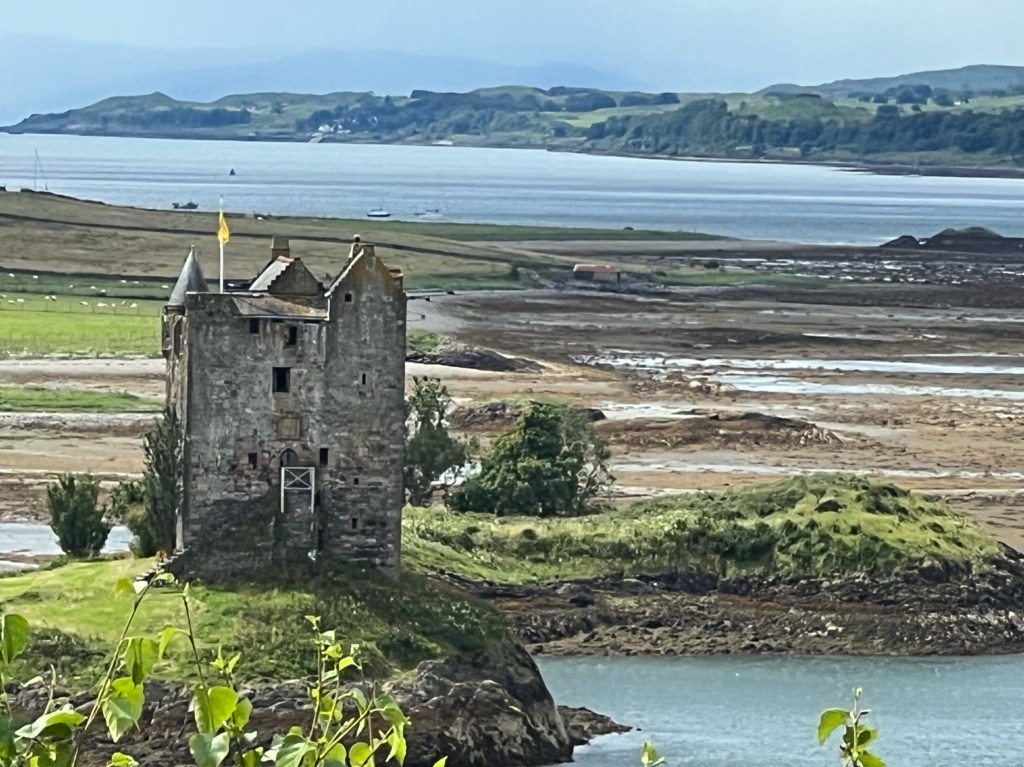
Driving south to Argyll was another spectacular drive. We had a little bit of rain again on this travel day, but the sun came out for a spectacular afternoon. There were some lovely castle ruins and drives along beautiful lochs (especially Loch Linne) to take your breath away at every turn! We also drove by Ben Nevis, the largest mountain peak in the UK.
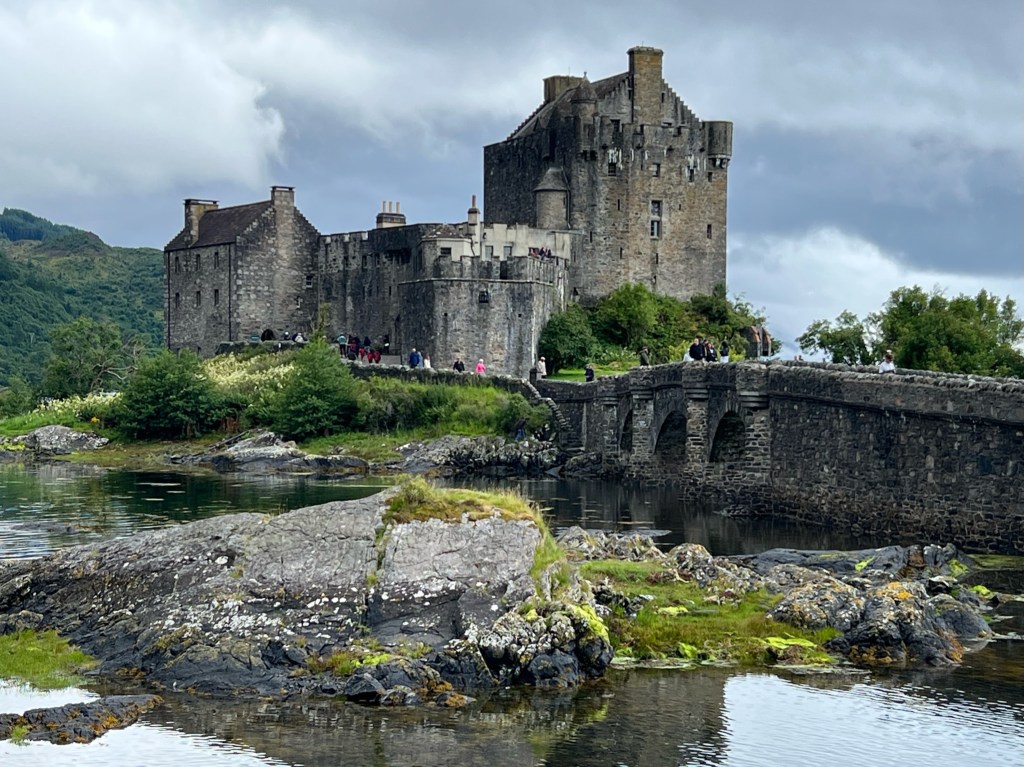
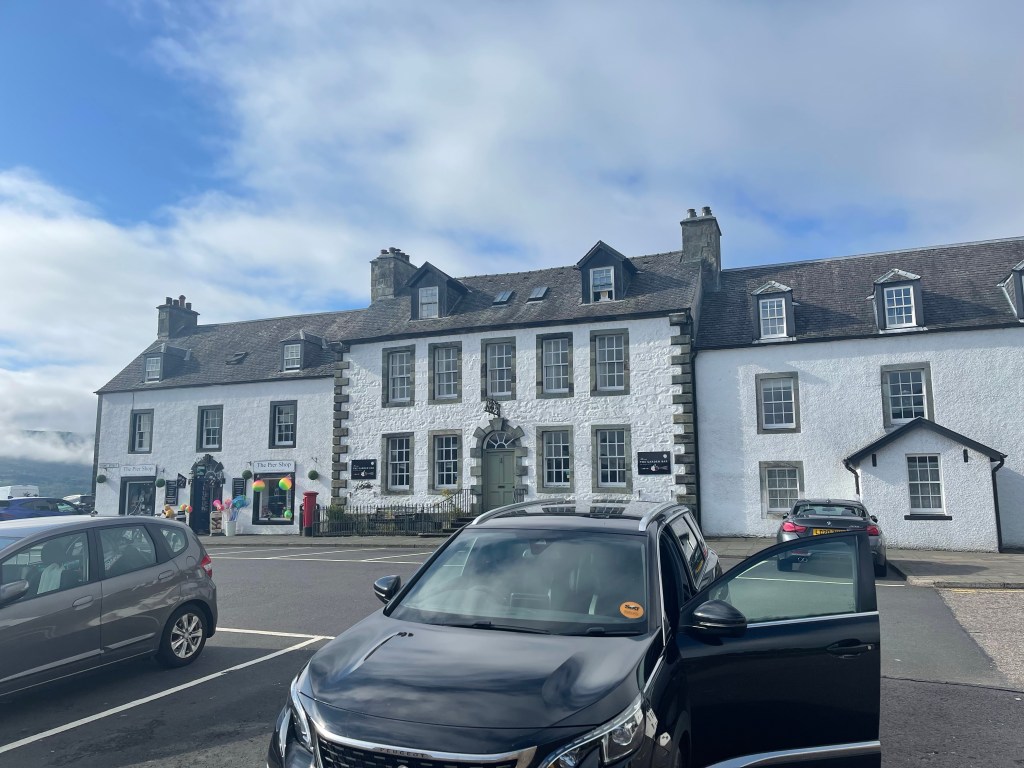
We particularly enjoyed a coffee stop at this spectacular little spot!
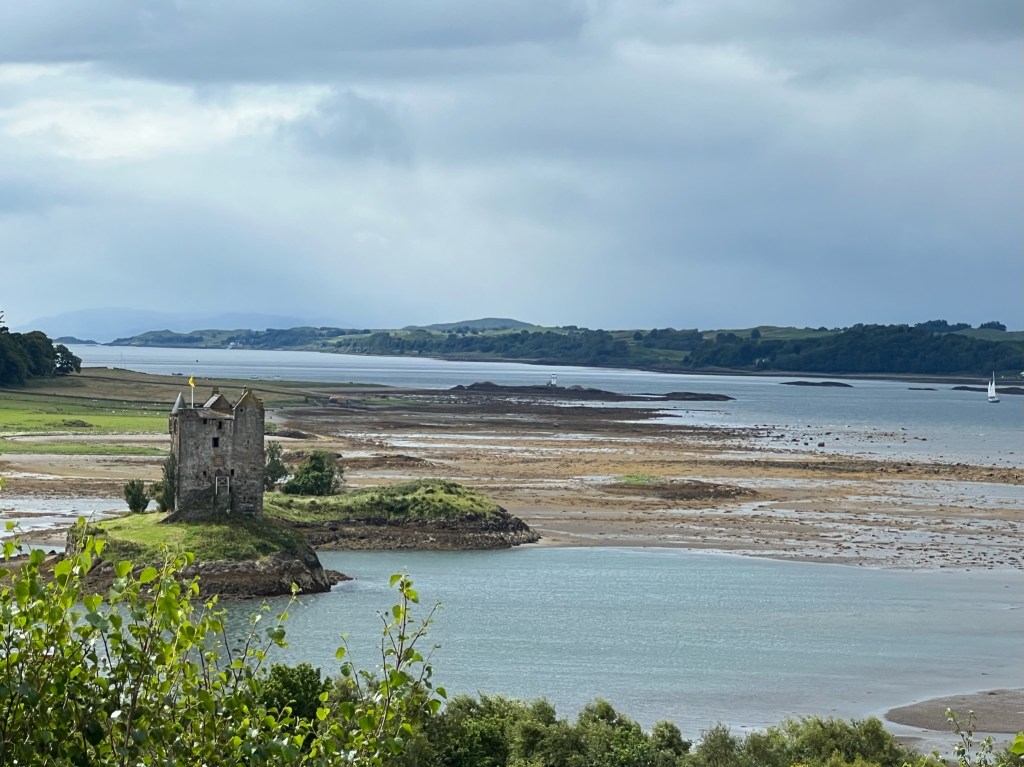
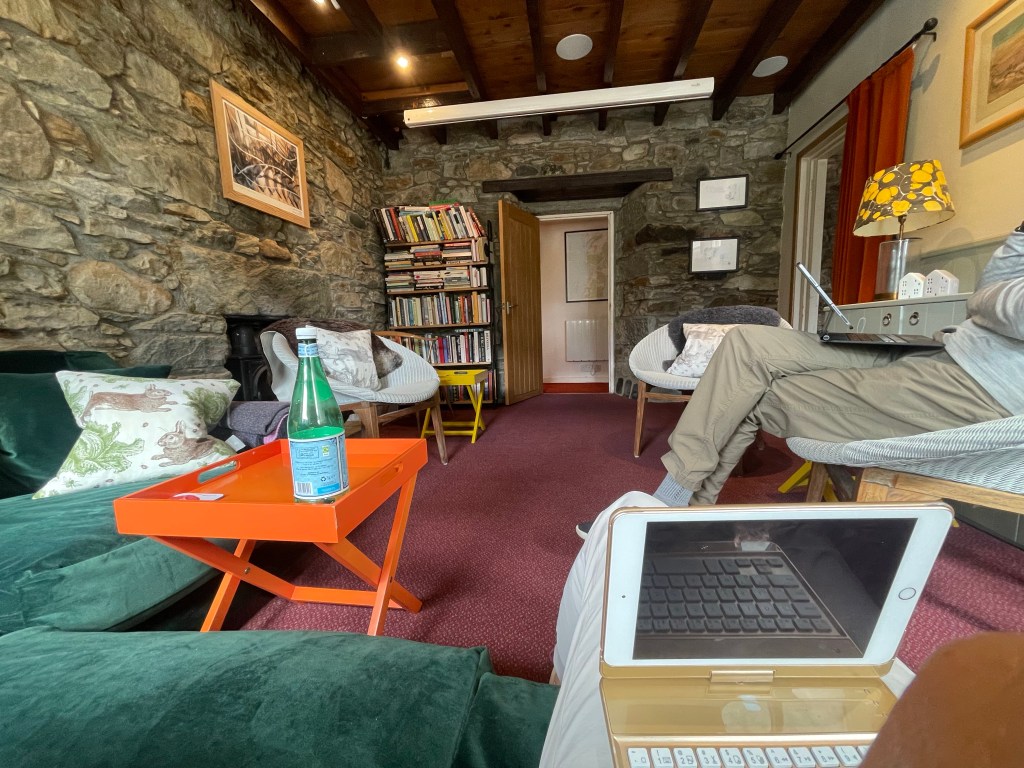
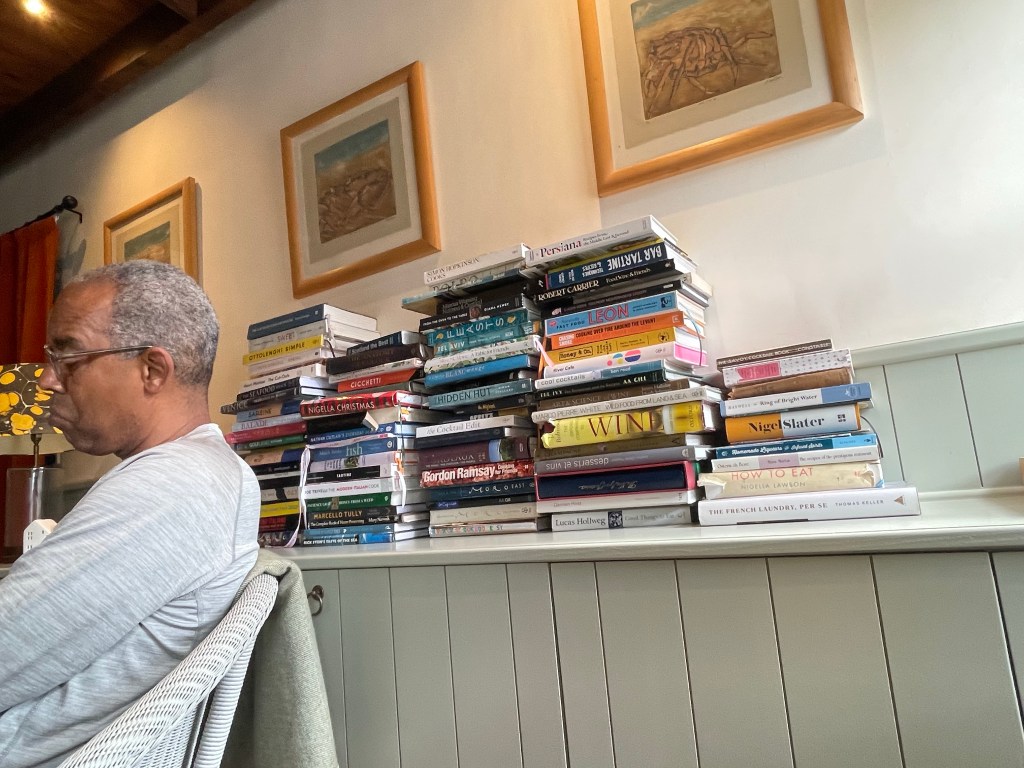
For our final stay, Jan selected the Kilberry Inn (www.kilberryinn.com) and we absolutely loved our stay here! First and foremost it is a Michelin Bib Gourmand restaurant with a few charming rooms attached. Breakfast and dinner are included with your stay. Run by chef Clare and her husband Dave who welcomes guests and is known for his Negronis, it was a delightful place that I would highly recommend visiting (although we heard a rumor they may be selling). Dave did share his secret to his Negronis which I am thrilled to try at home!

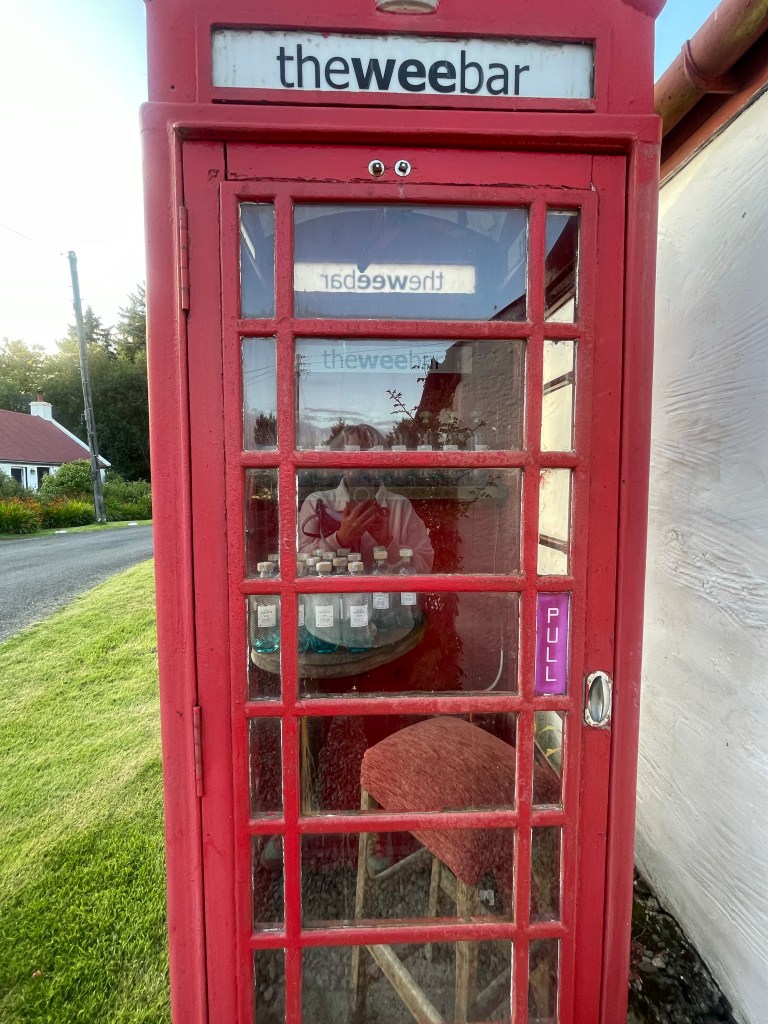
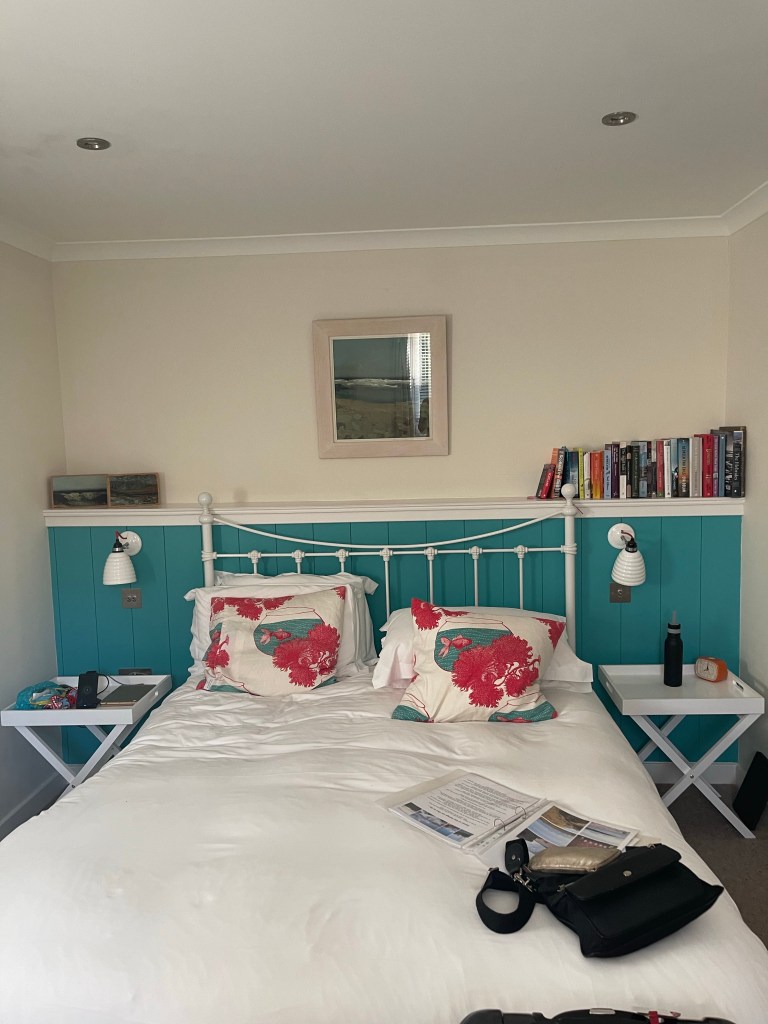
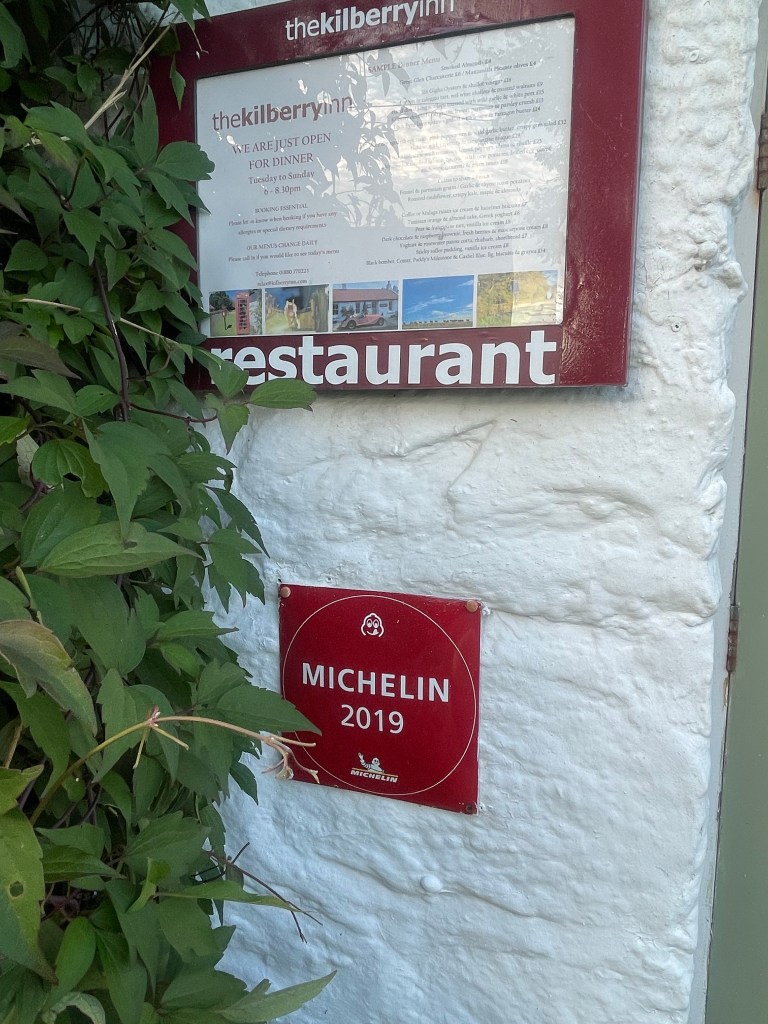
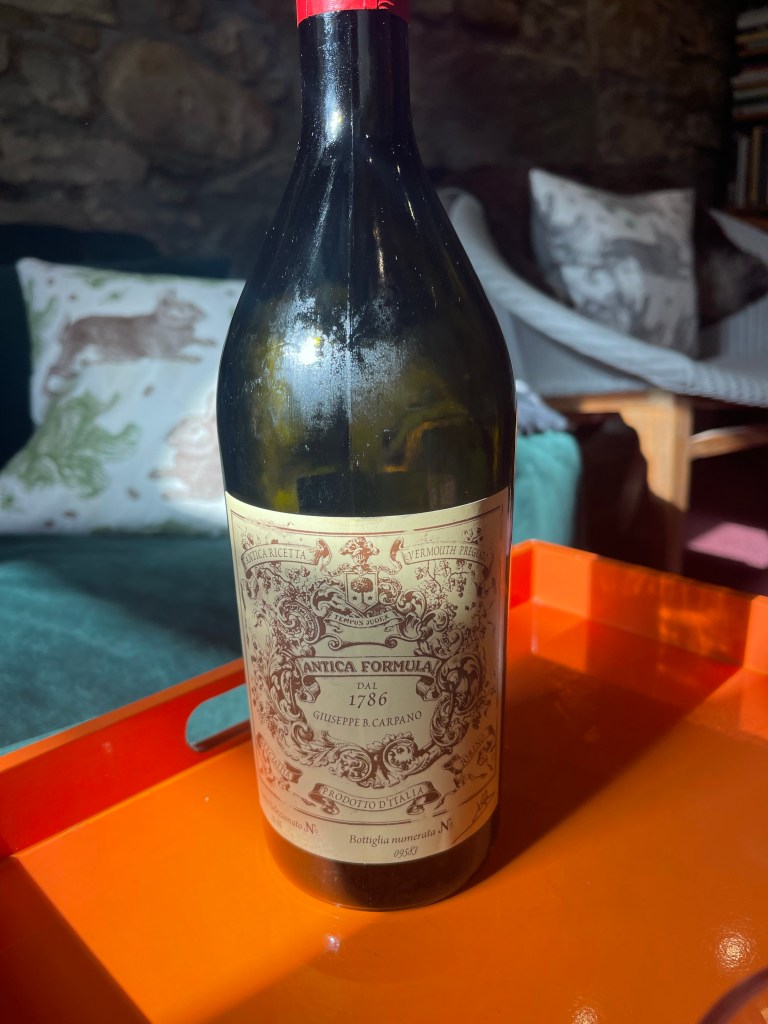
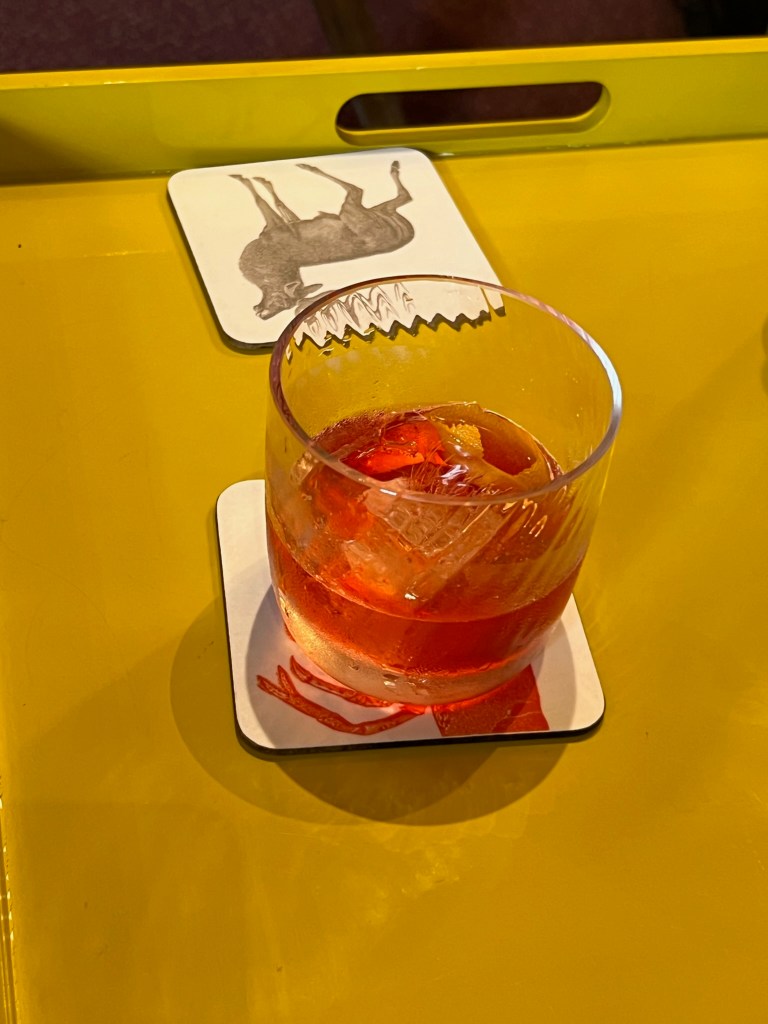

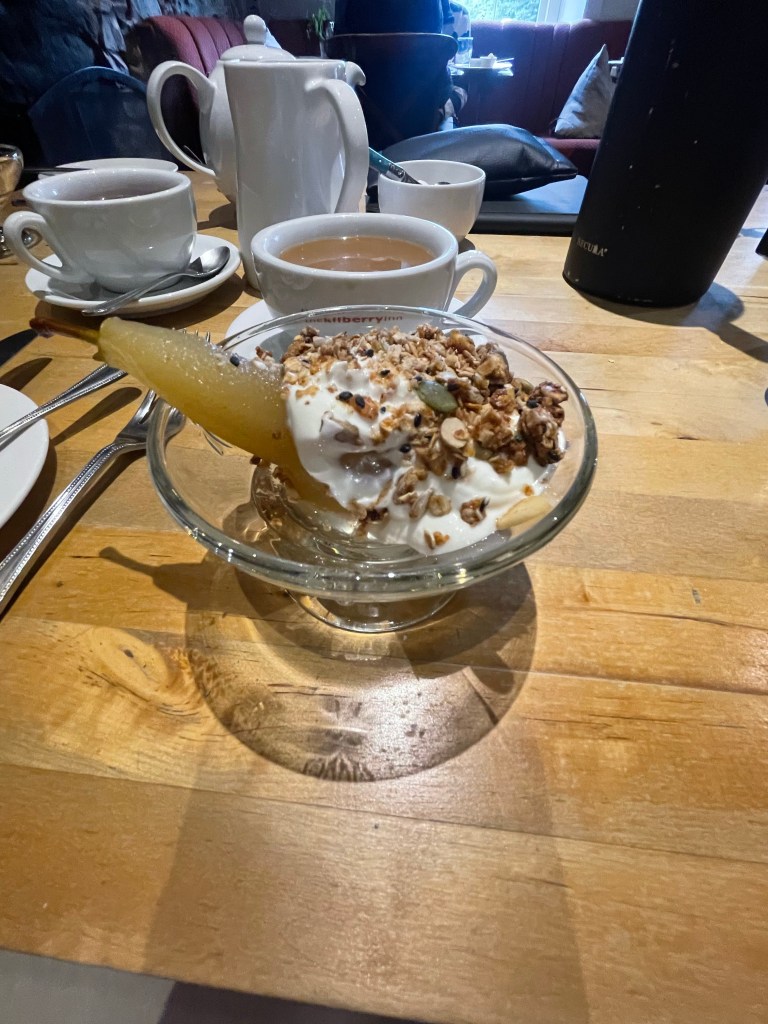
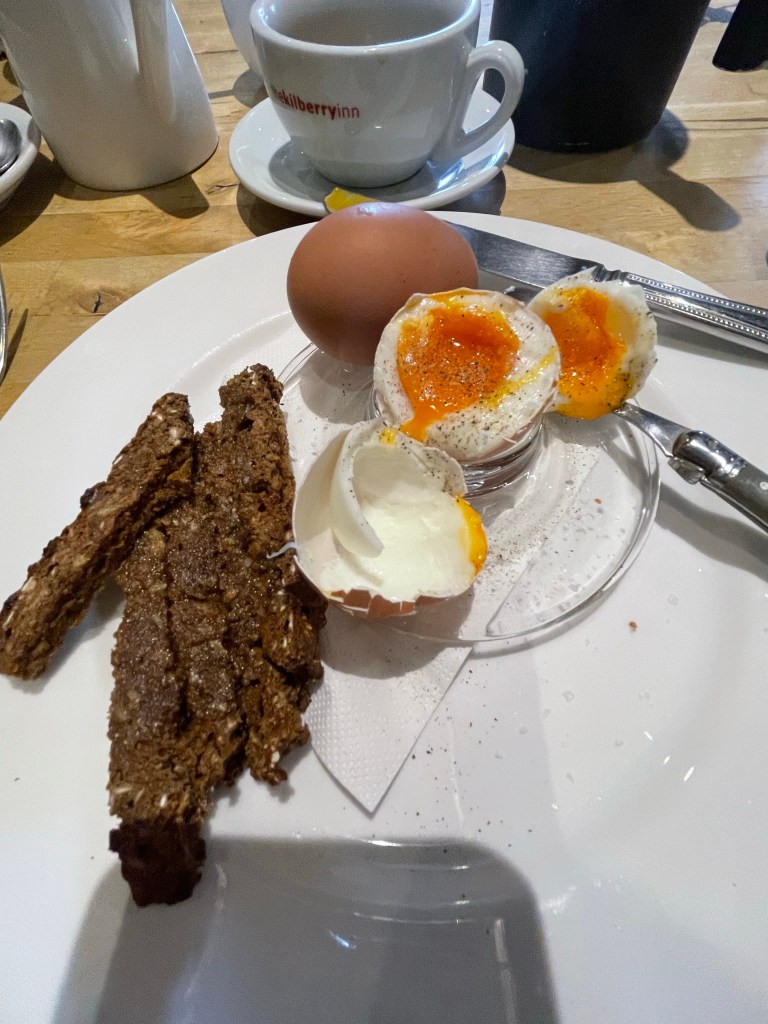
The meals were, of course, amazing. Breakfast was homemade breads and marmalades served with a beautiful fresh yoghurt and baked pear parfait and followed with a hot entree highlighting fresh local eggs. This was the only spot on our trip where I let go of my fasting and indulged in breakfast!
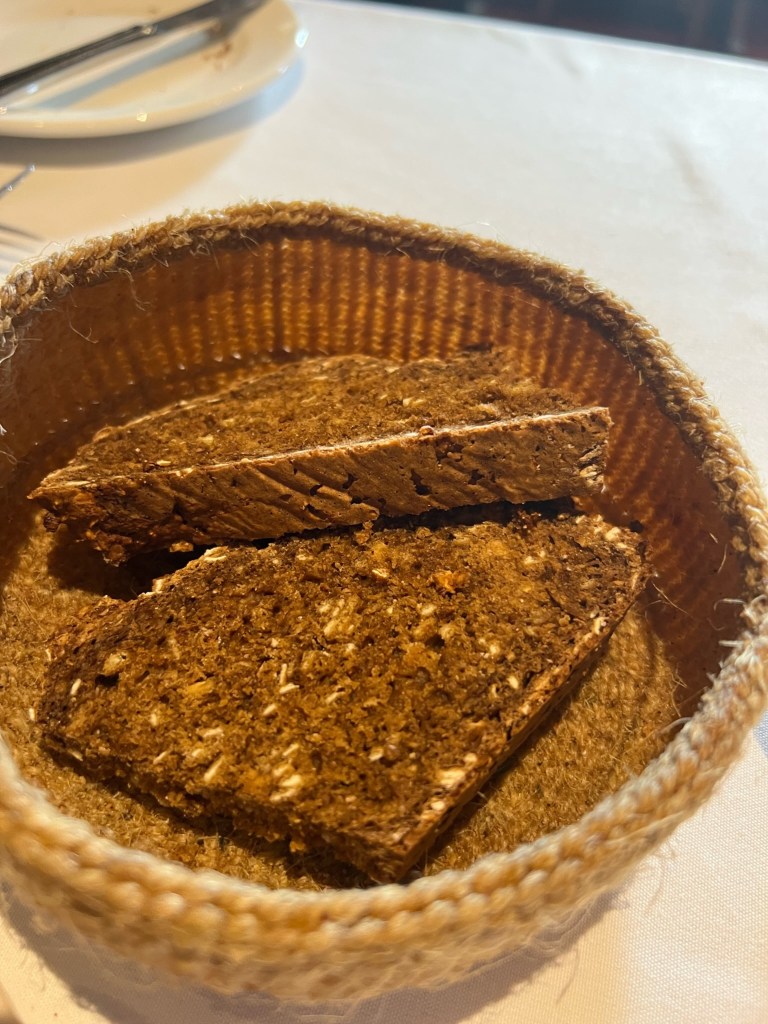
A typical dinner was homemade breads (again…on the first night Dave served us a second basket which we learned was just a little too much by the end of the meal. But that homemade soda bread…!). For a second course we particularly enjoyed a fennel, cardamom & taleggio tart with red wine shallots and toasted walnuts or a delicious smoked haddock and sweet corn chowder with fennel.


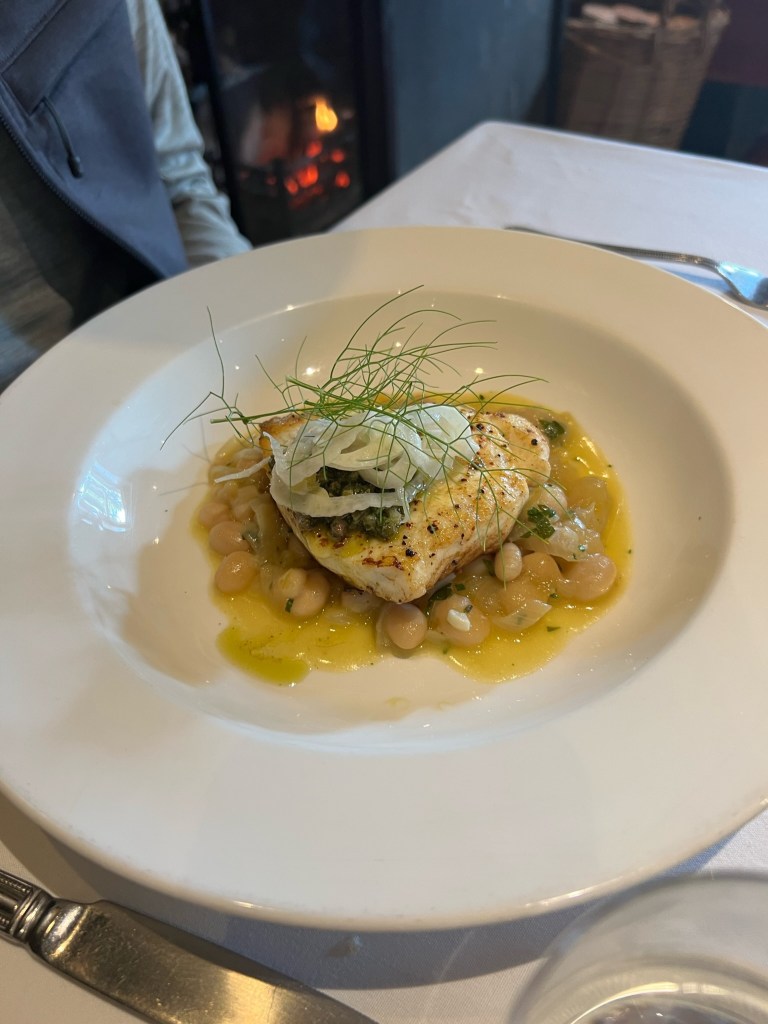
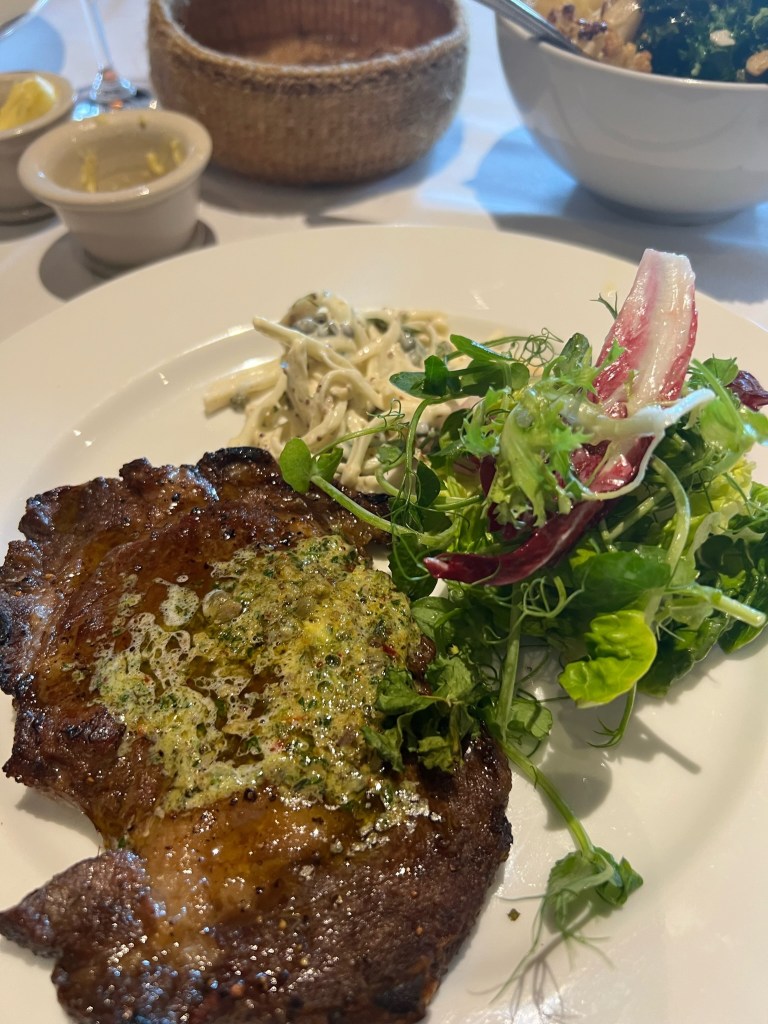
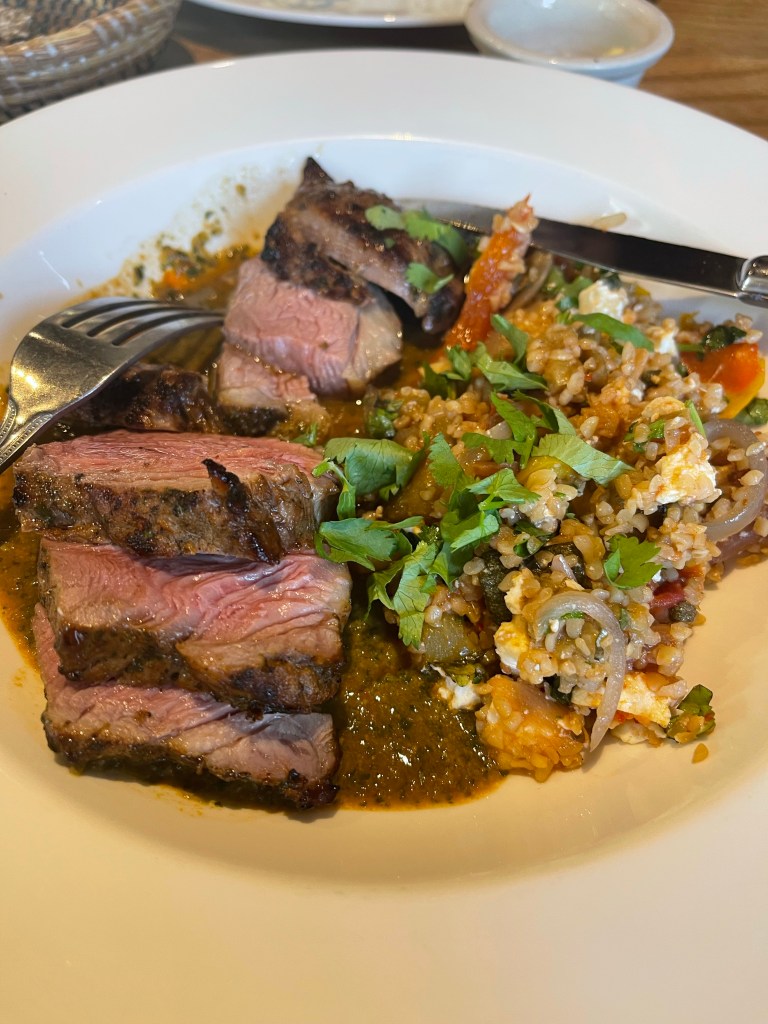
For a second course, we enjoyed a fantastic halibut with haricot beans, salsa verde and pickled fennel; a dry aged rib eye steak with celeriac remoulade & a cafe de Paris butter sauce; or a honeyed lamb tagine with bulgar wheat, aubergine, courgettes and feta. Sides of minted new potatoes; roasted cauliflower with krispy kale, maple & almonds (my favorite); or fennel & Parmesan grating were also available.
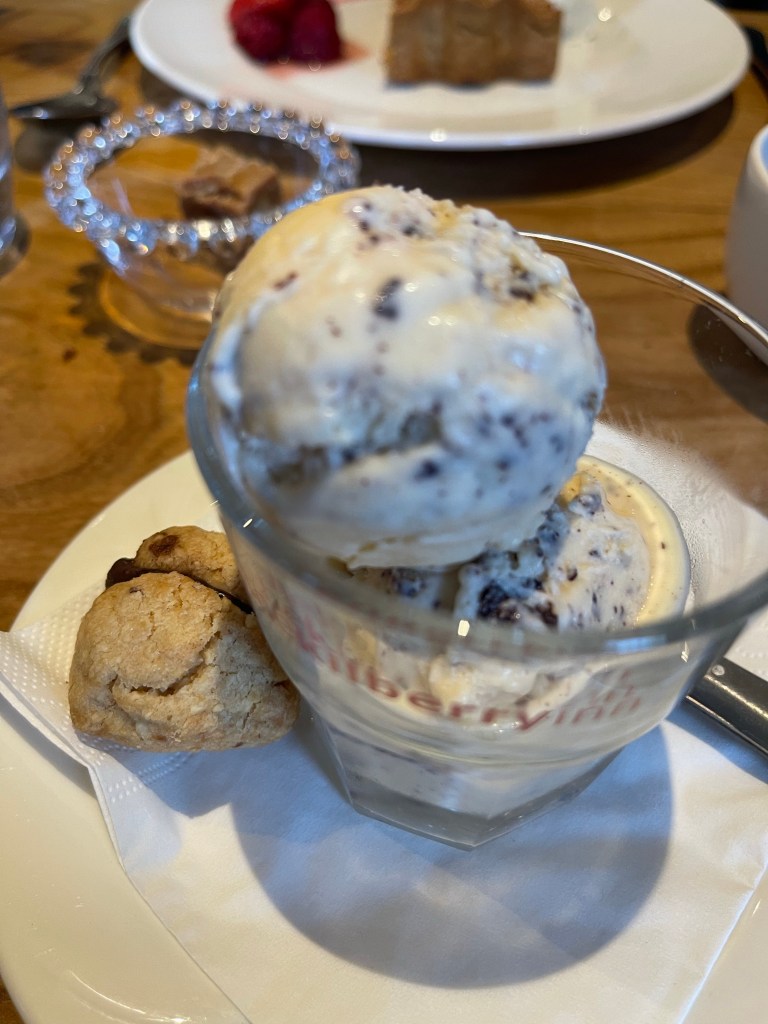
And of course we had to sample the amazing desserts, from Stracciatella ice cream & ‘baci di dama’; to raspberry and almond tart; to Tunisian orange and almond cake with Greek yoghurt and berries; to of course sticky toffee pudding!


On our first day out and about, we jumped on the Rick Steeves recommended “Three Island Tour” out of the town of Oban.
The Hebrides are a community of more than 136 islands off the west coast of Scotland’s mainland (including the Isle of Skye, which we had just left). Based on how close they are to the mainland, the islands are grouped into either the Inner or Outer Hebrides. On this trip, we were only able to explore some of the islands in the Inner Hebrides.
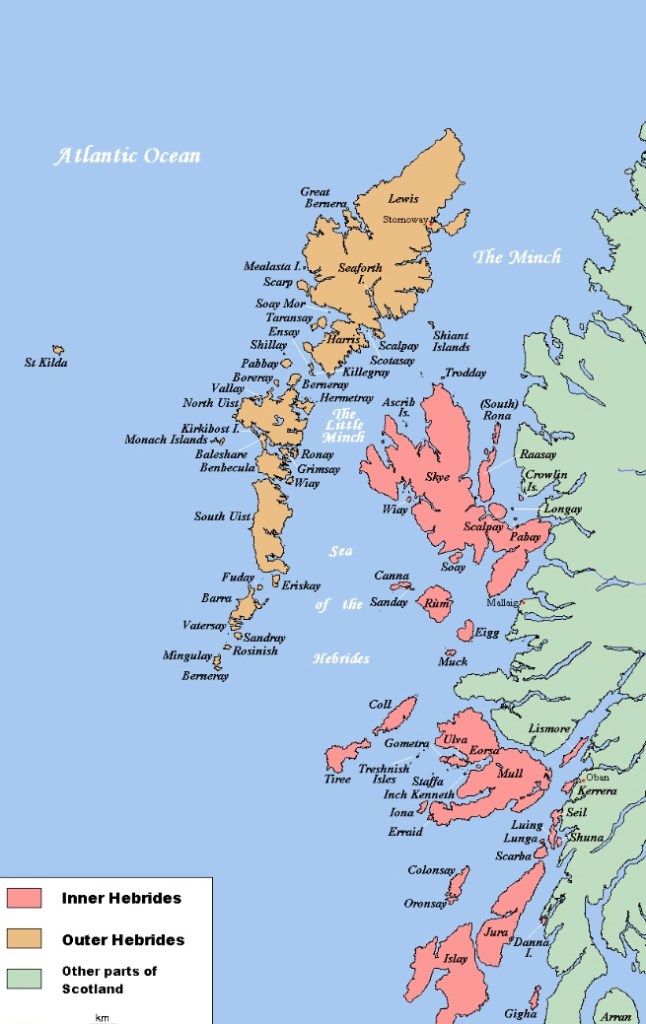
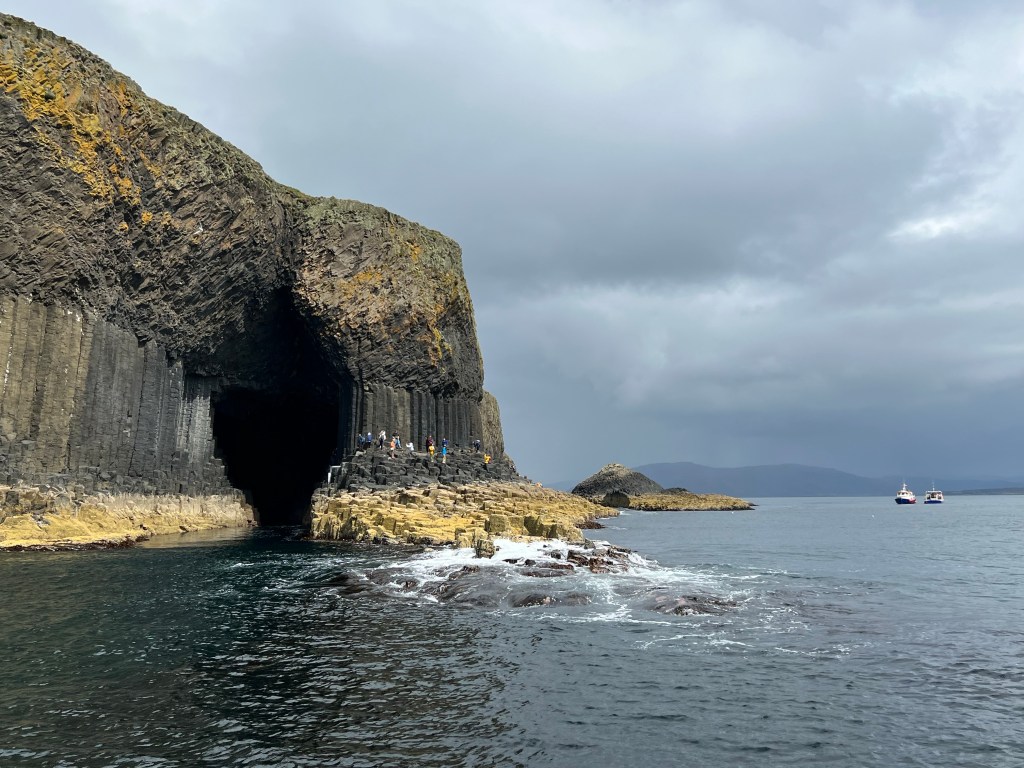
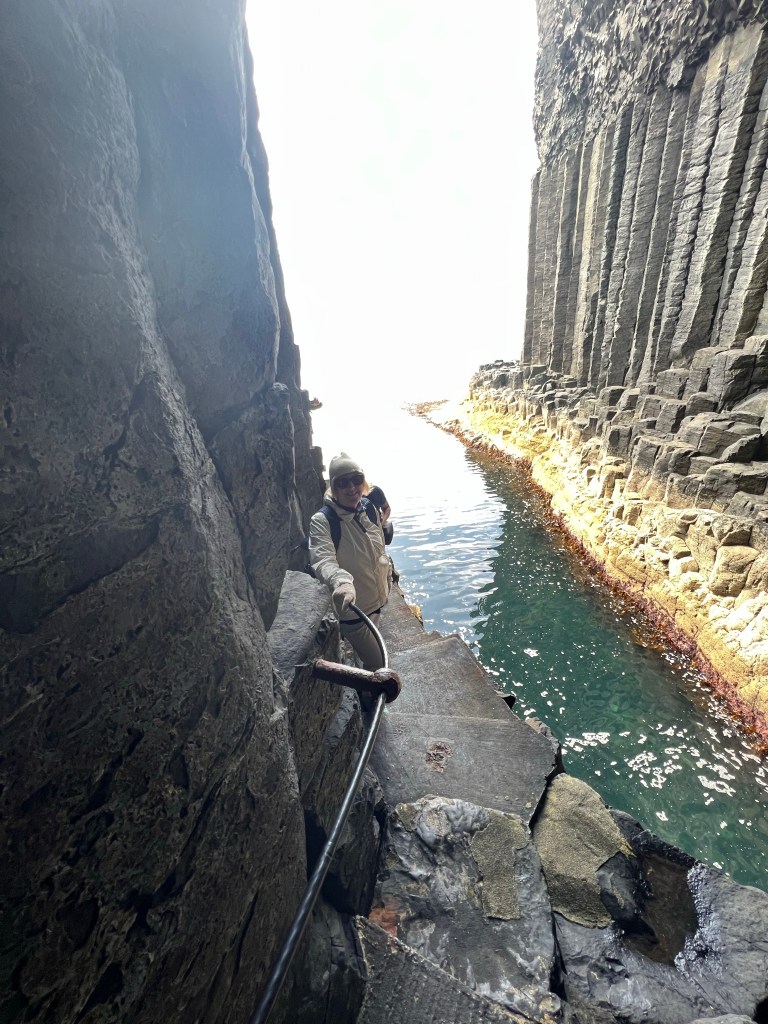
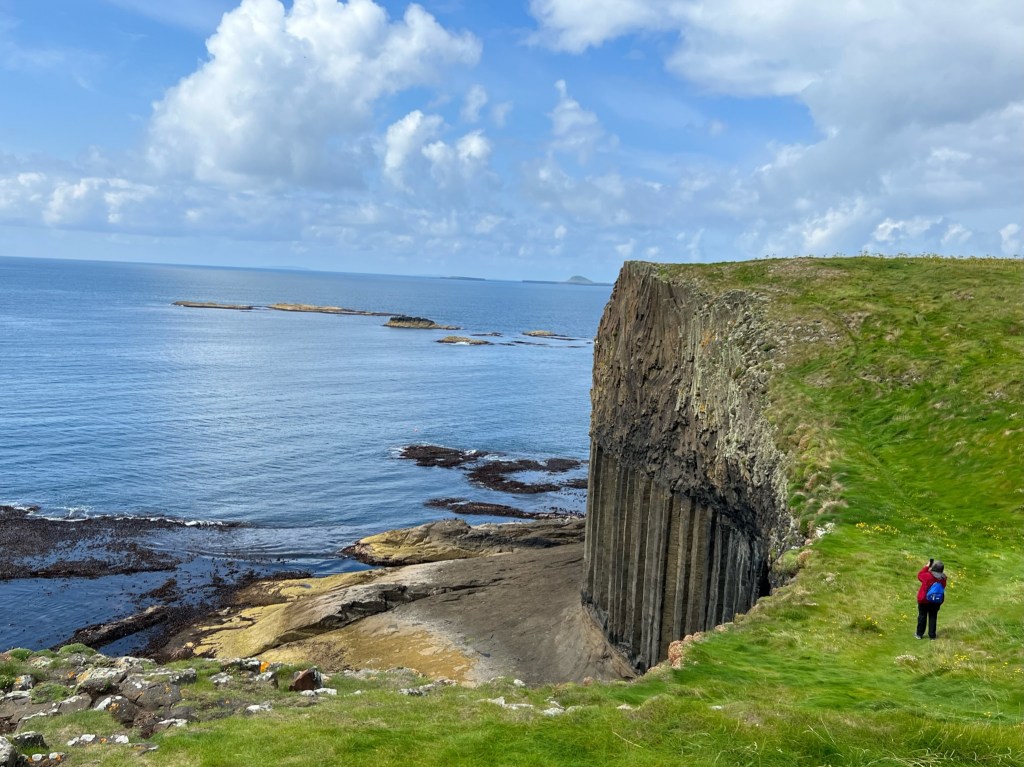
Not all of the islands are inhabited (around 45,000 people scattered across the inhabited lands) and they can vary quite dramatically in size. For our adventure we made it to three additional islands in the Inner Hebrides. We started on the expansive Isle of Mull (the second largest of the inner islands with only around 3,000 inhabitants), moved on to the remote and very small Staffa (uninhabited except for seasonal Atlantic Puffin and other nesting seabird residents), and finished up at the burial site of ancient Kings, Iona.
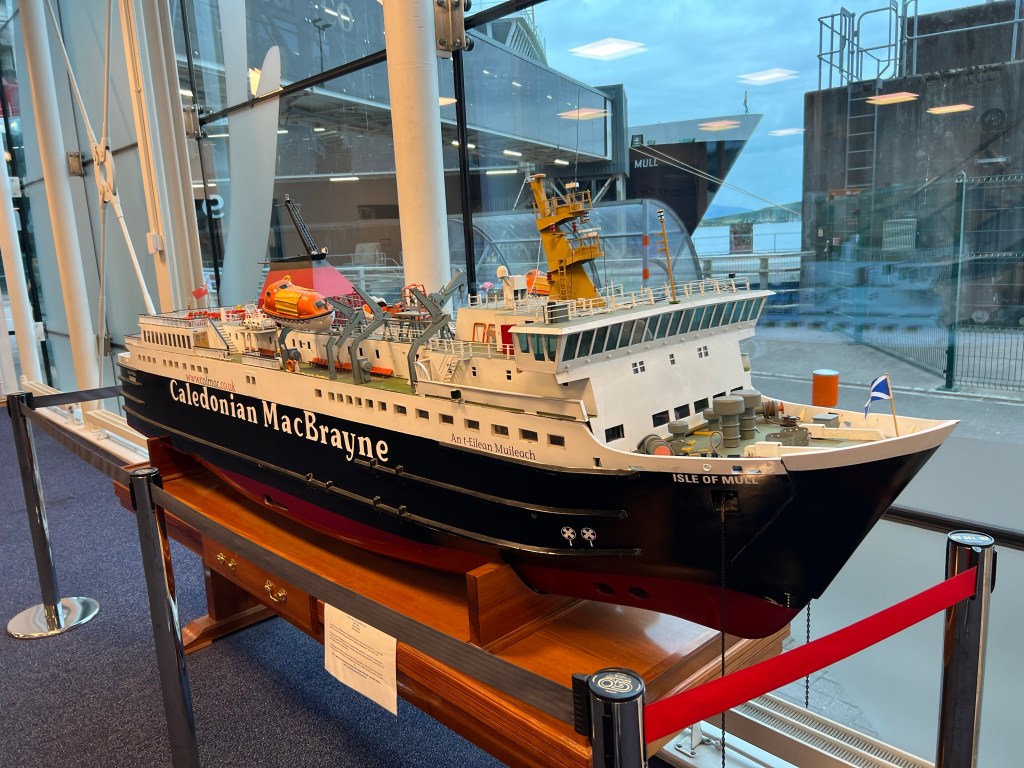
In order to travel to Mull, we embarked on a massive Caledonian MacBryean ferry that was appropriately named “Isle of Mull” for a 45-minute voyage.
We disembarked to the dock at Craignure and then boarded a double-decker bus for a 1:20 drive to Fionnphort situated on the opposite side of the island.
Mull
Mull has very diverse topography, we passed through areas with very steep and tall mountains (> 3000 ft), several lochs (lakes), fast-moving streams, and sweeping valleys where it’s very clear that the sheep easily outnumber humans. Many of the sheep sported strange looped horns and all of them seem to enjoy finding ways to escape outside the fencing to chomp on what they must consider the most delectable grasses that are of course situated right alongside the road.

And speaking of the road, it was entirely a narrow, single-track (but two-way) roadway with spaced pullouts that are needed in order for oncoming vehicles to pass each other! Navigating this challenging route was no easy feat especially driving a wide, long and tall double decker bus. Narration during the ride highlighted points of interest and informational stories of historical events. One eerie story was about the leader of a warring clan about to go into battle who asked a fairy woman (very popular figures in these parts) about his fortunes for the next day. She told him that if milk was provided at his breakfast table he’d be victorious, however if he had to ask for milk, he would die. Needless to say he had to ask for milk, and true to the prophecy he was beheaded in battle and his headless body was carried for some distance by his horse – the spot where it finally fell is marked by a monument.
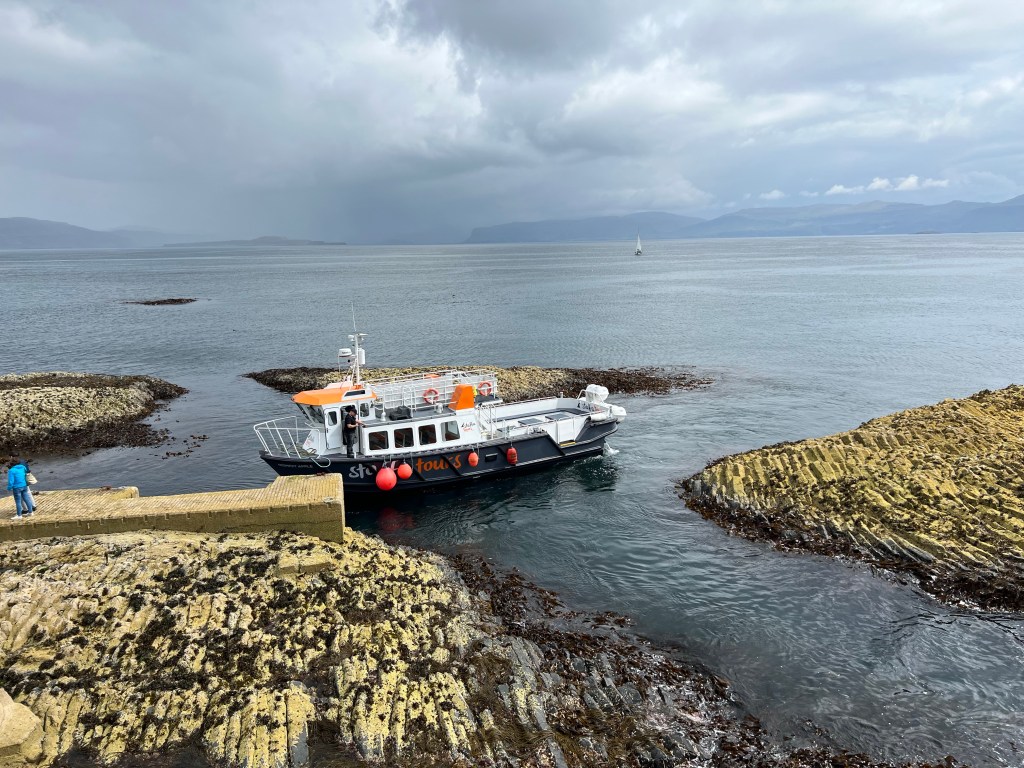
The ferry landing of Fionnport marked the end of our road journey where we boarded a much smaller vessel to set sail for the Isle of Staffa.
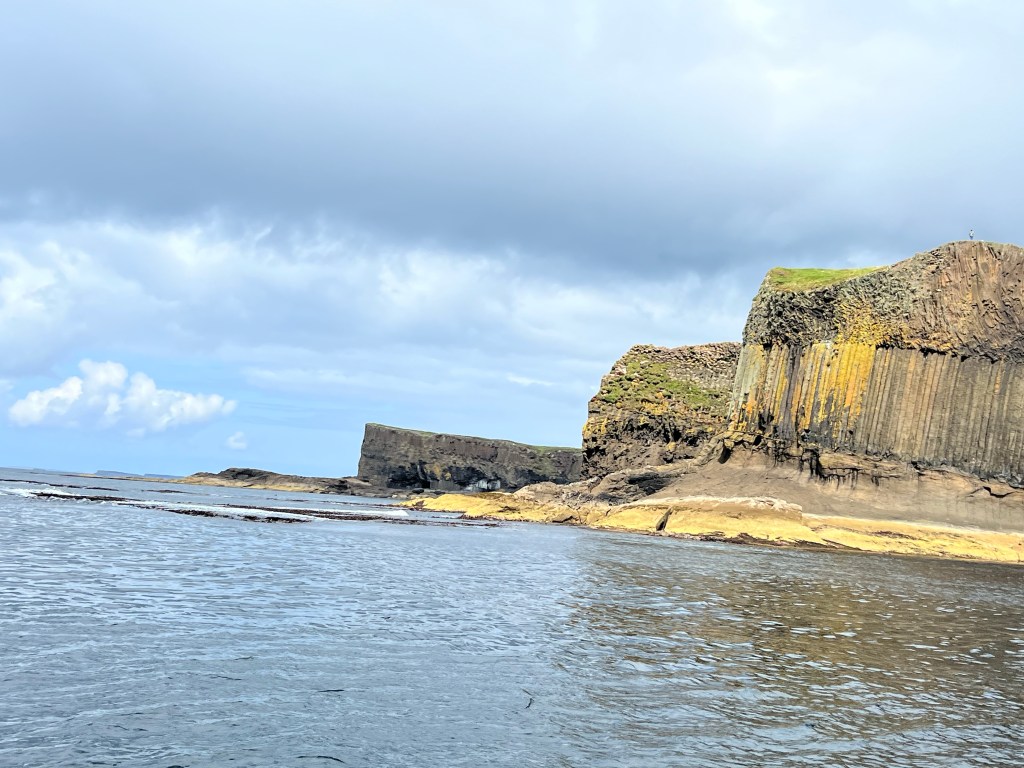
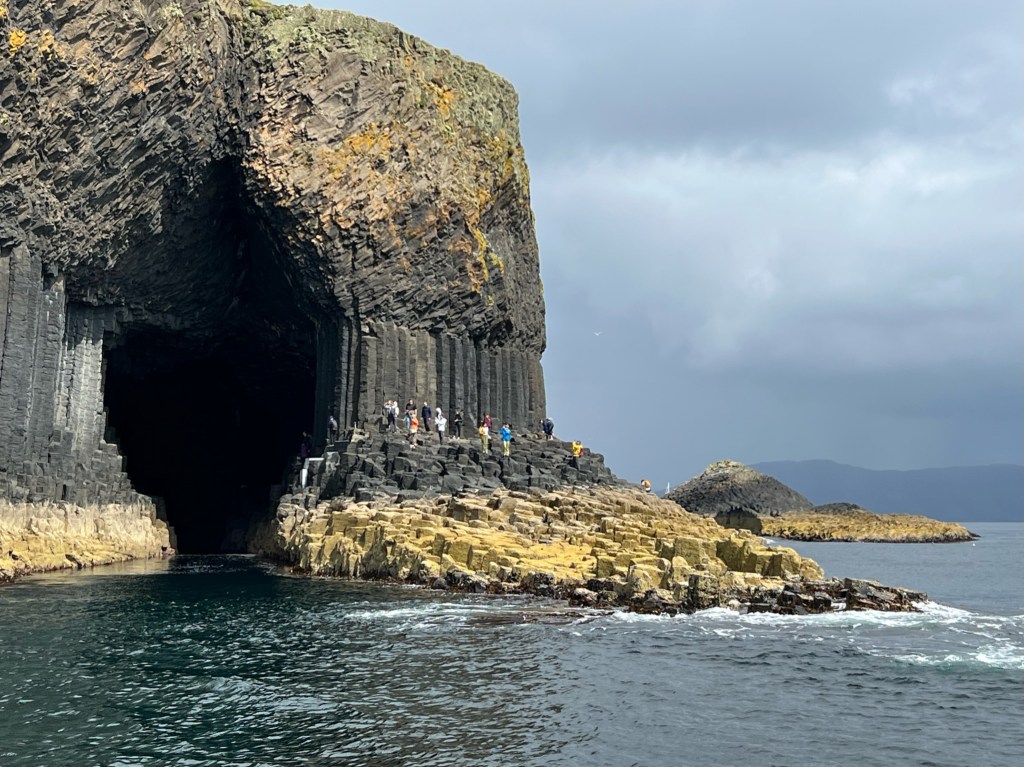
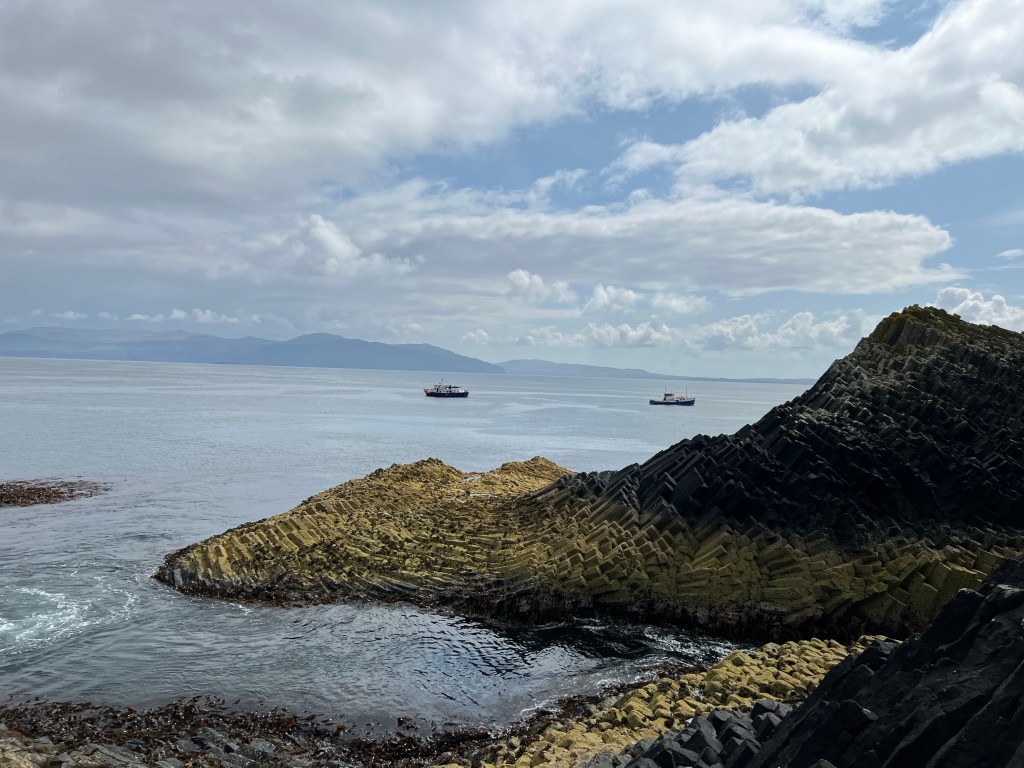
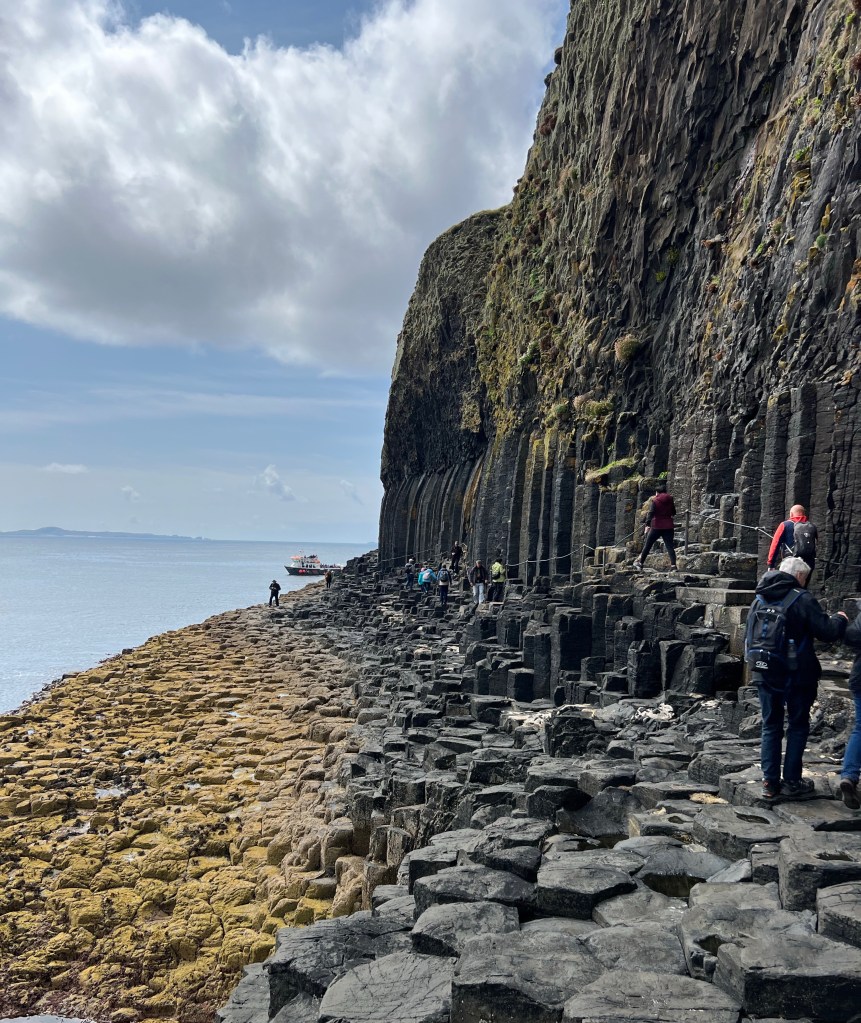
Staffa
The 35-minute trip to Staffa was over the open ocean so thankfully we had partly cloudy skies with calm winds, and uncharacteristically smooth water.
This part of the ocean is known to be rich in sea life and on the way out our Captain spotted a sunbathing grey seal, intersected this feisty pod of common dolphins, and also pointed out a lone Pilot whale.



Iona
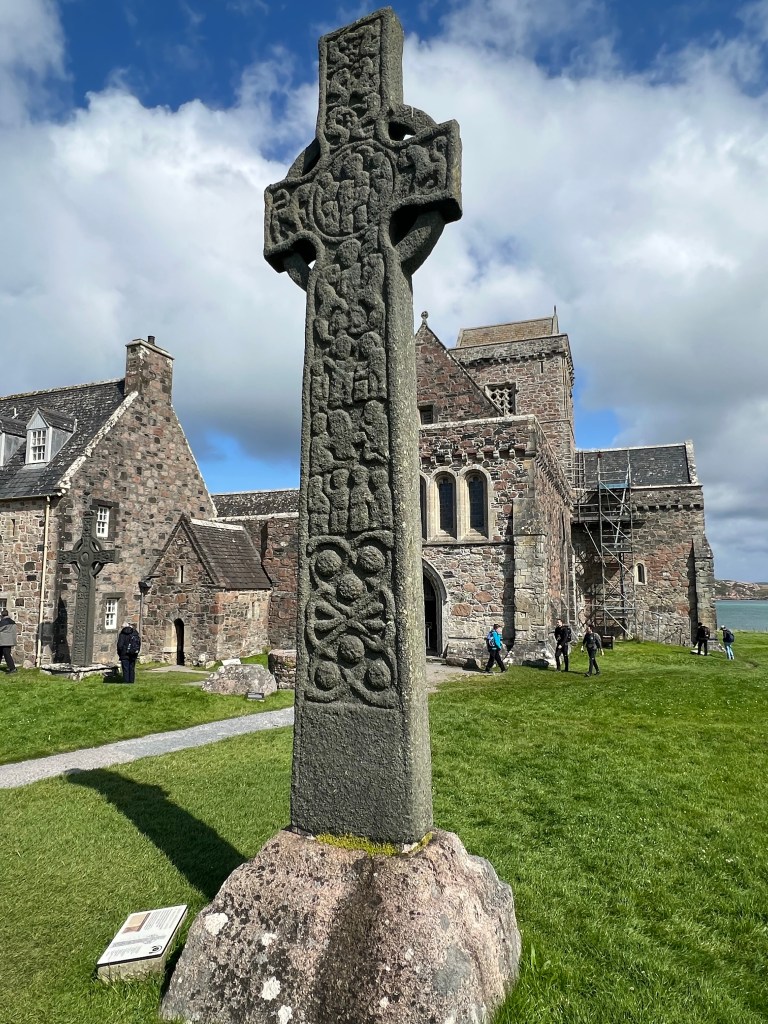
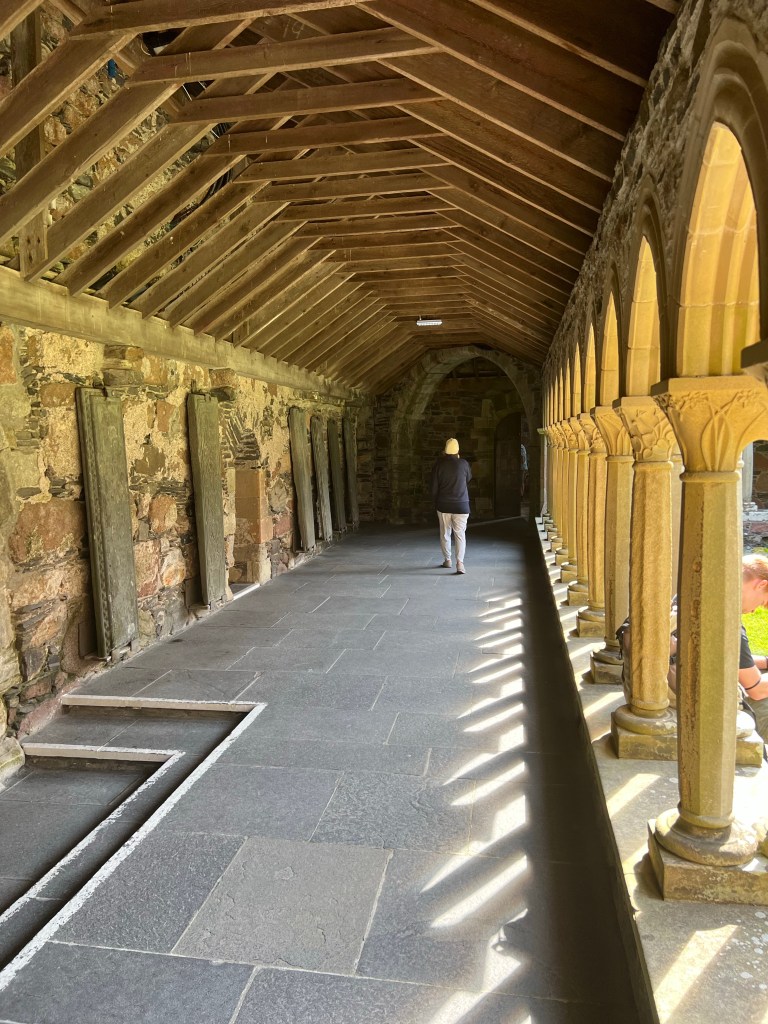
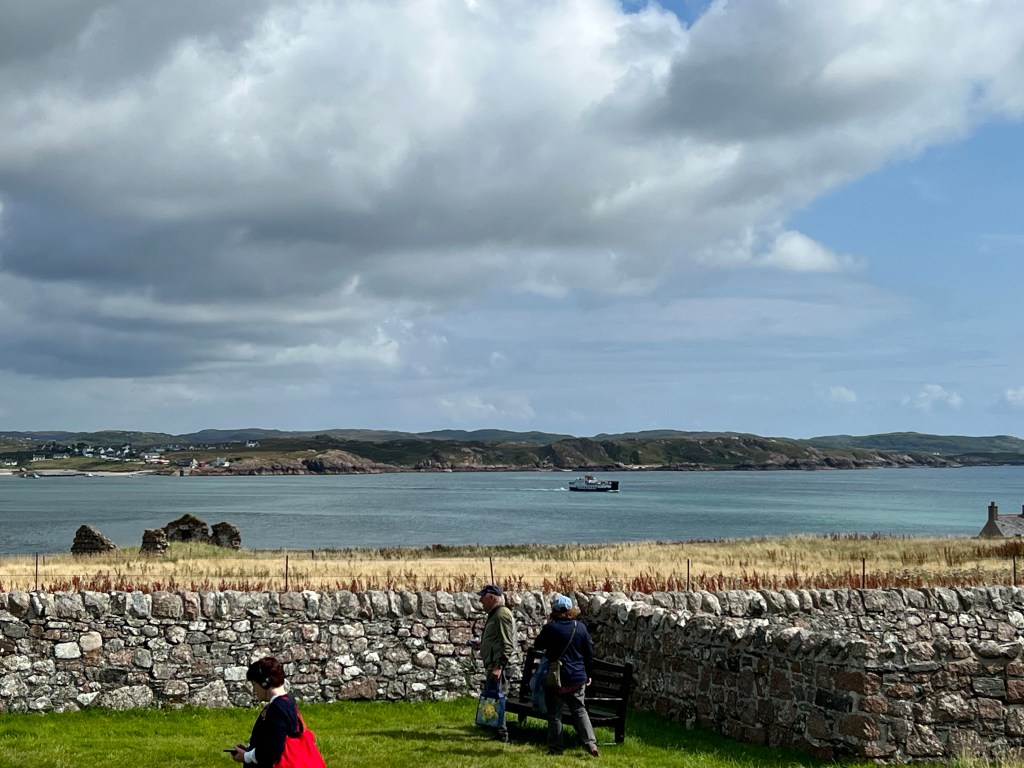
The relatively small island of Iona (1 mile x 4 miles) is known as the birthplace of Celtic Christianity in Scotland. An ancient convent, a church and cemetery (Cabal Odhrain “St. Oran’s Chapel”), and the Iona Abbey will all be found on the island. It boasts a population in the mid to high 100’s and only residents are allowed to have cars on this island.

Many nuns came from nobles families, however the nunnery served as a refuge for unmarried daughters, widows, illegitimate girls and estranged wives. The women did not lead secluded or impoverished lives – they had daily contact with the outside world and supported themselves financially. The convent successfully operated for over 350 years.

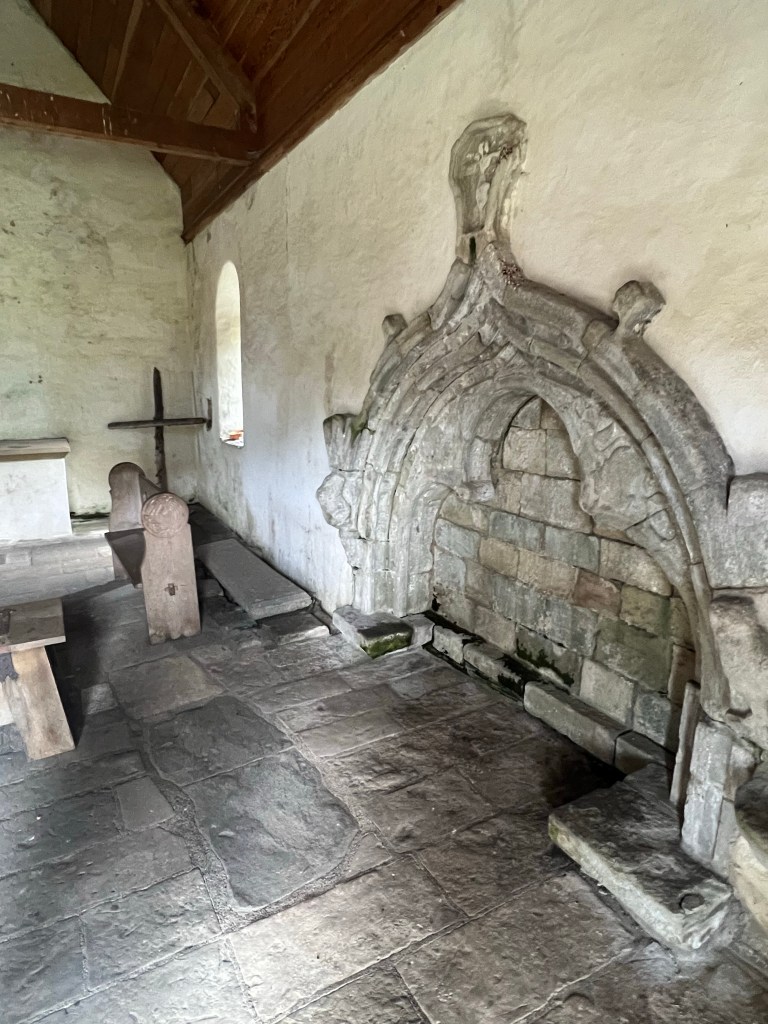
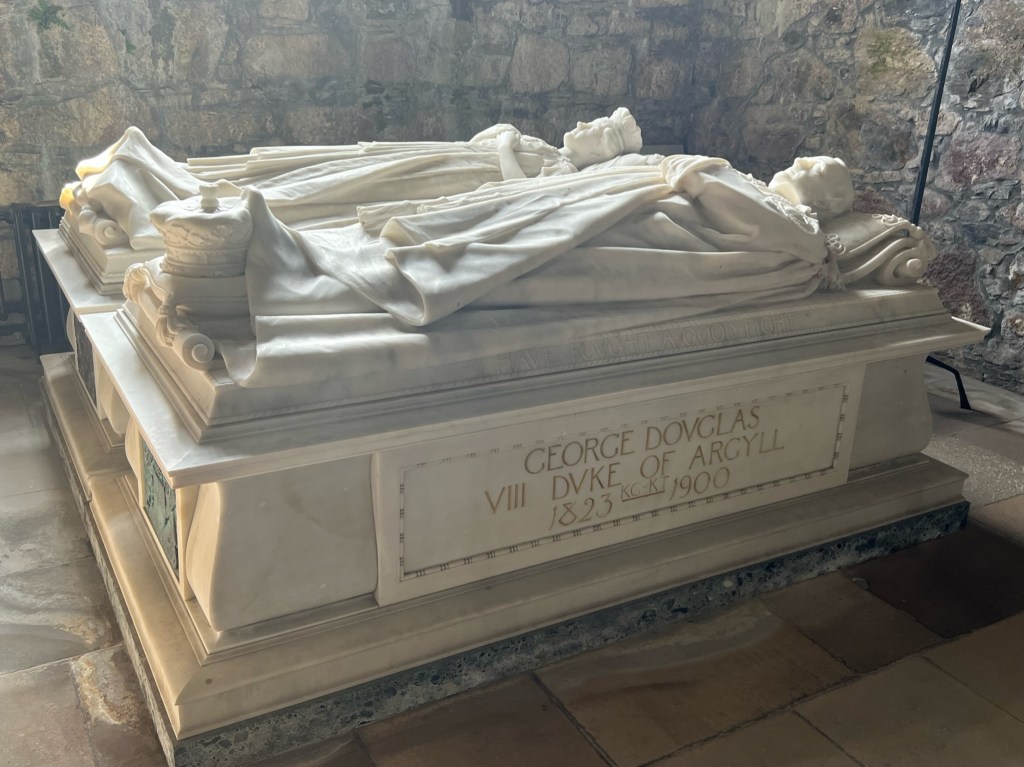
The burial chapel of the MacDonald Lords of the Isles (St Oran’s) was built in the 1100’s and is the oldest intact building on Iona. It is said to be the final resting place of 48 Kings of Scotland and Norway, although the graves are currently not identifiable.


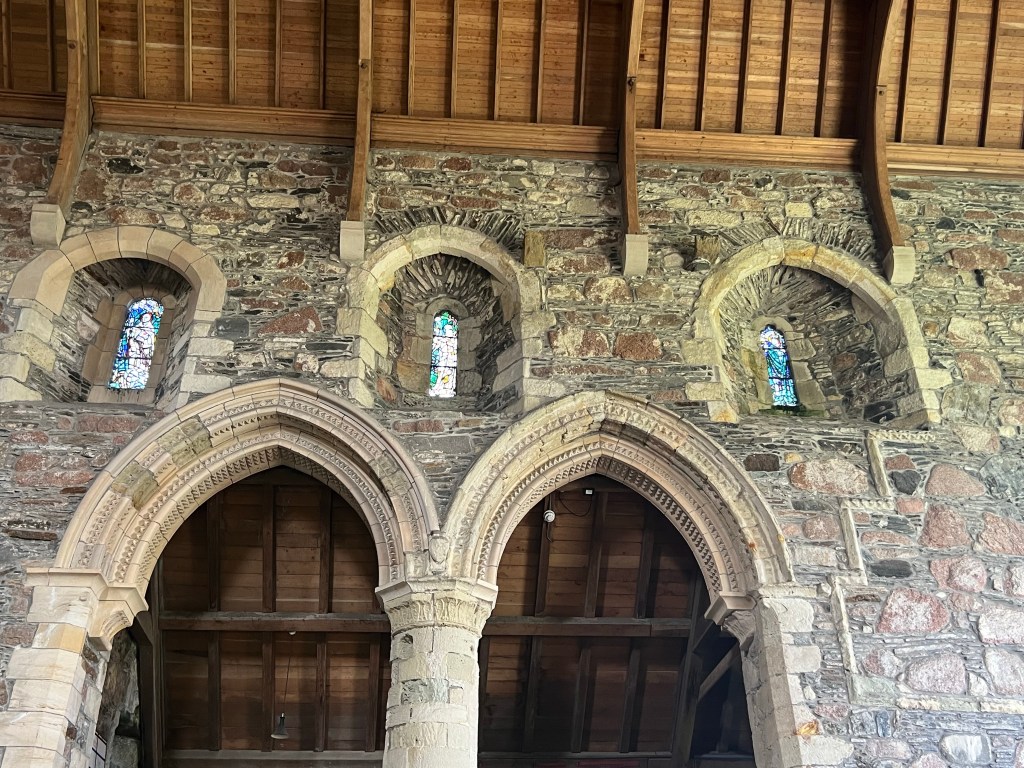
The Iona Abbey was founded in 563 by the monk Columba (later designated a saint) who was from Ireland. The monastery is of particular historical and religious interest to pilgrims as it’s the most elaborate and best preserved Christian building from the Middle Ages in the Western Isles of Scotland. Much of the Abbey today was rebuilt in the 20th century. It is thought that the Book of Kells (considered the finest piece of manuscript art from early medieval Europe and now housed in Dublin) was likely made on Iona




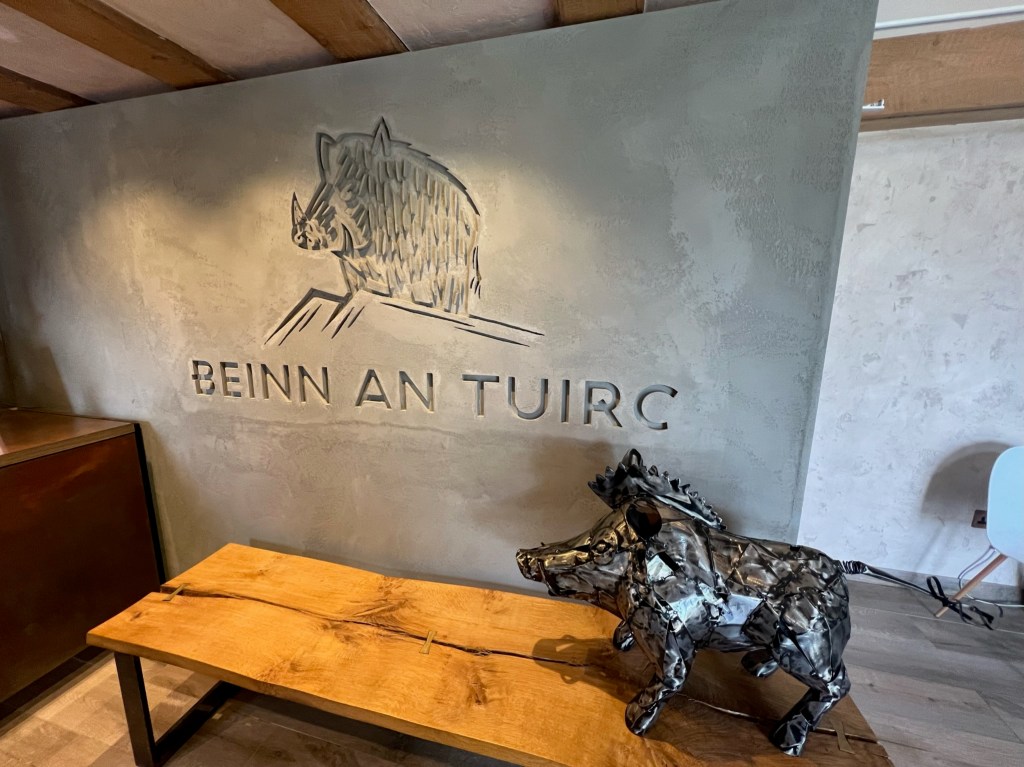
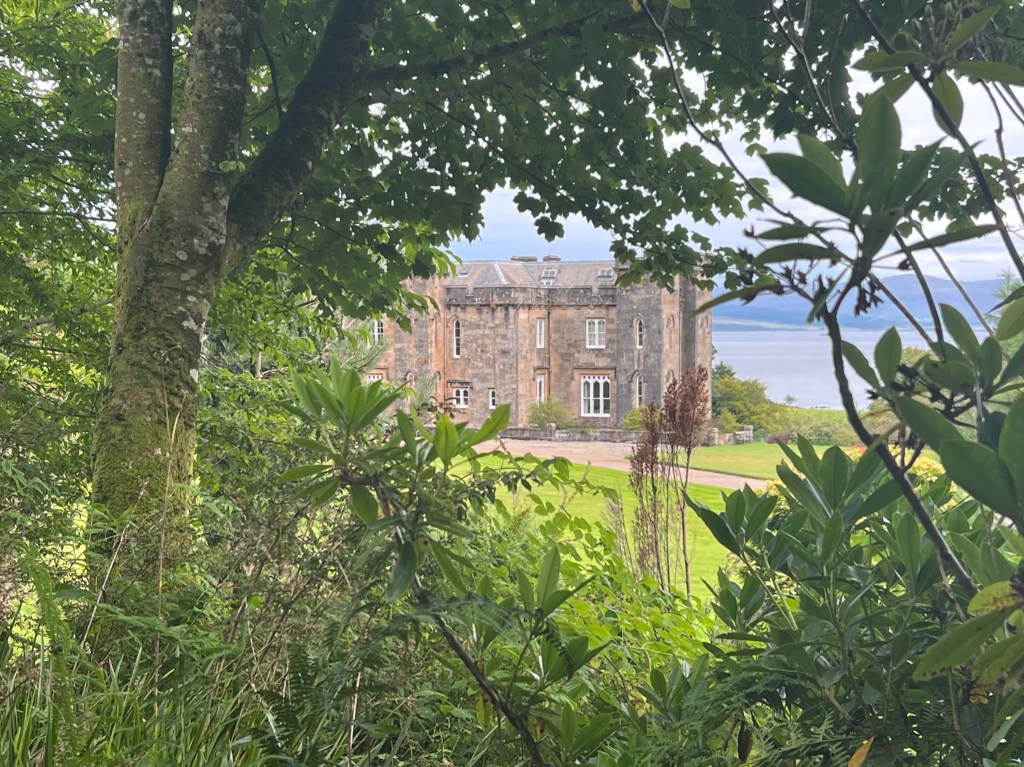
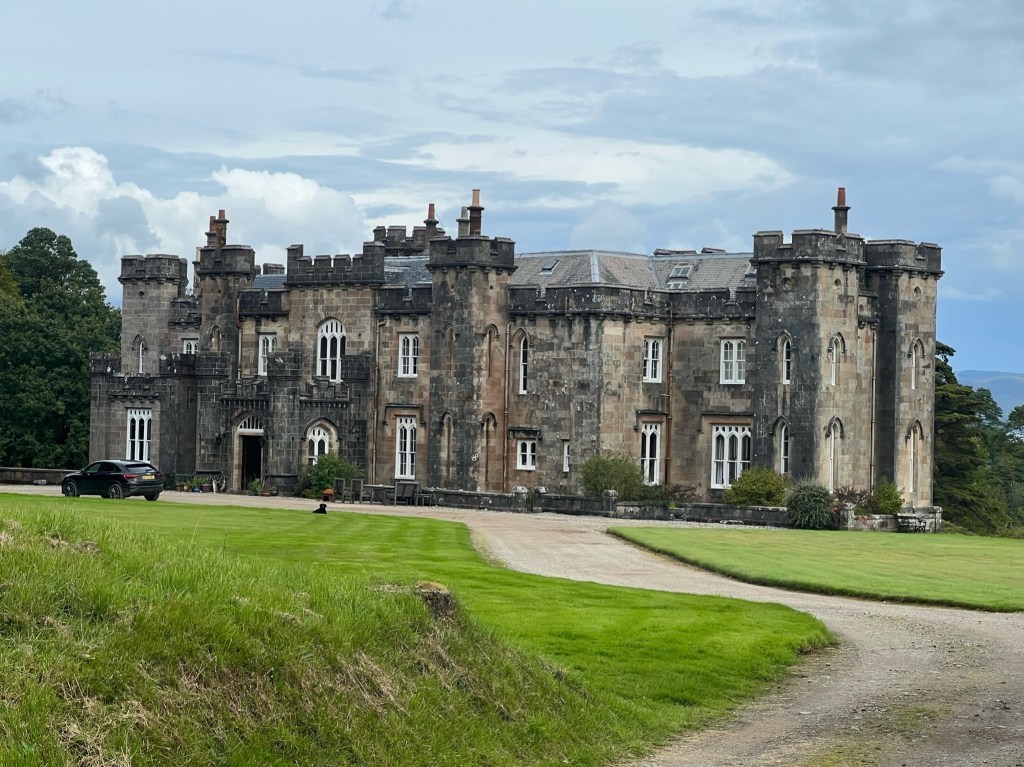
On the 2nd day of our stay in Argyll, we took it a little bit easier just to enjoy the Kilberry Inn and the local area. We drove down to Torrisdale Castle Estate to walk around this private estate and to also visit the owner’s gin distillery (Beinn an Tuirc, or “hill of the wild boar”, home of Kintyre Gin). The estate is inhabitated by Niall Macallister and his family and Neill gave us a lovely private tasting before we headed off on a walk. He was a delightful host!
Our final day was spent driving to Galway to turn in our car and board a flight to London, where we’ll spend a few final days with Zoe before returning home. The drive between Argyll and Galway was just another breathtaking adventure driving along Loch Long and Loch Lomand.





 Gary and Jillian's New Adventures
Leave a reply to Tom Cancel reply