Belfast, the capital of Northern Ireland and its largest city, is situated in one of 6 counties of the island of Ireland that remain part of the United Kingdom (England, Scotland, Wales & Northern Ireland). This all occurred toward the beginning of the last century as part of a treaty to give the remaining areas of Ireland independence from England (the Republic of Ireland). Unfortunately there was major division of opinion about the treaty and that led to a period of Irish civil war (there had been numerous failed rebellions against English rule prior to this treaty being established). Ireland had already suffered greatly in the mid-1800’s due to a devastating 4-year period of famine from their potato crop destroyed by blight, which lead to the starvation deaths of about 1 million Irish people, and emigration of over 2 million Irish across the globe (hence why so many people have Irish roots!).
We got a sobering introduction to the long history of discrimination, conflict and turmoil between those Protestant (generally loyalists to England) vs. Catholic (generally nationalists that support a unified & independent Ireland). Our view is that the issues are primarily grounded in ethnic differences as opposed to religious ones. These tensions boiled over again in the late 1960’s where nationalists in Northern Ireland sought independence and unification which resulted in a violent and divisive period called “the Troubles”. Now Brexit has added a new layer of challenge and uncertainty. All this, among other history, causes the situation to be quite complicated and from our vantage point, unsettled. Also makes us wonder at what humans have failed to learn from history.
Belfast has the look and feel of a bustling city, lots of people moving about and a seemingly working class industry. Two massive cranes, one named Goliath and the other David, dominate the waterfront. We visited the unique Titanic Belfast Museum that captures the evolution of shipbuilding including the infamous Titanic which was built there. The museum has a cool theme-park type ride that “flys” you through the sights, sounds and feel of the Belfast shipyard. We learned quite a lot more about the Titanic’s construction, its ill-fated rendezvous with an iceberg, fascinating stories of souls traveling on the vessel, and the full extent of lives lost, than had been gained in watching the movie version of the disaster.
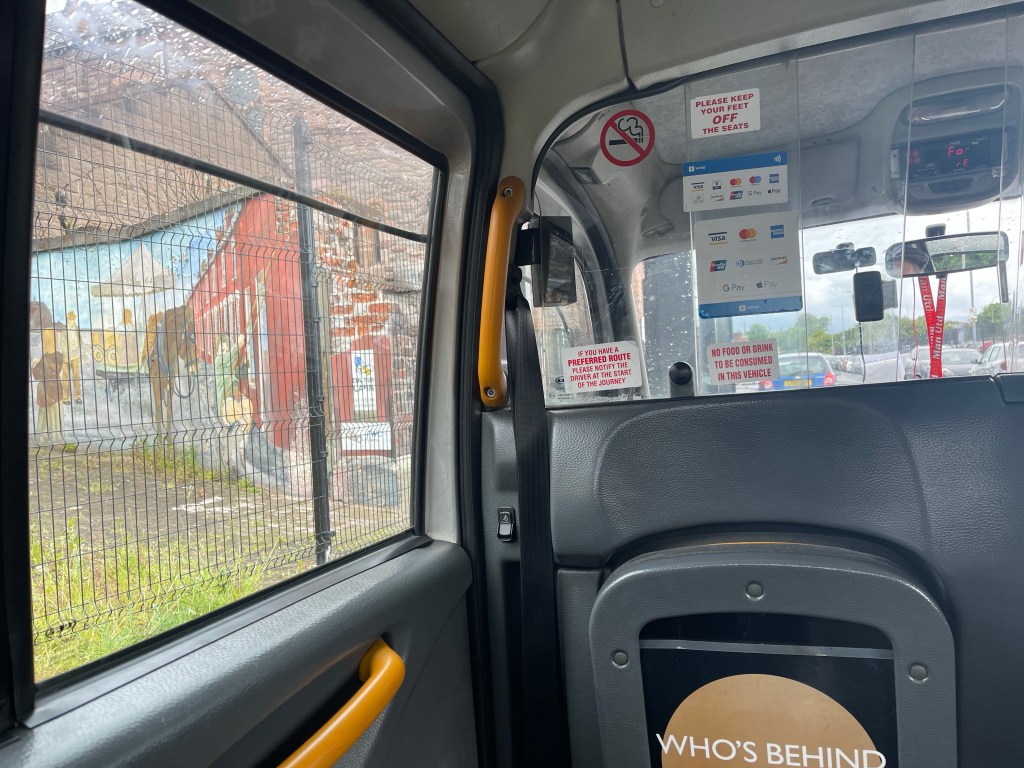
We also embarked on a “Black Taxi tour” – housed in a traditional iconic black taxi cab with a driver/guide that provides narration as you traverse through the sectarian neighborhoods in Belfast. Our driver/guide was Catholic yet tried to give us a relatively balanced description of the issues, viewpoints and incidents that defined the Troubles period.
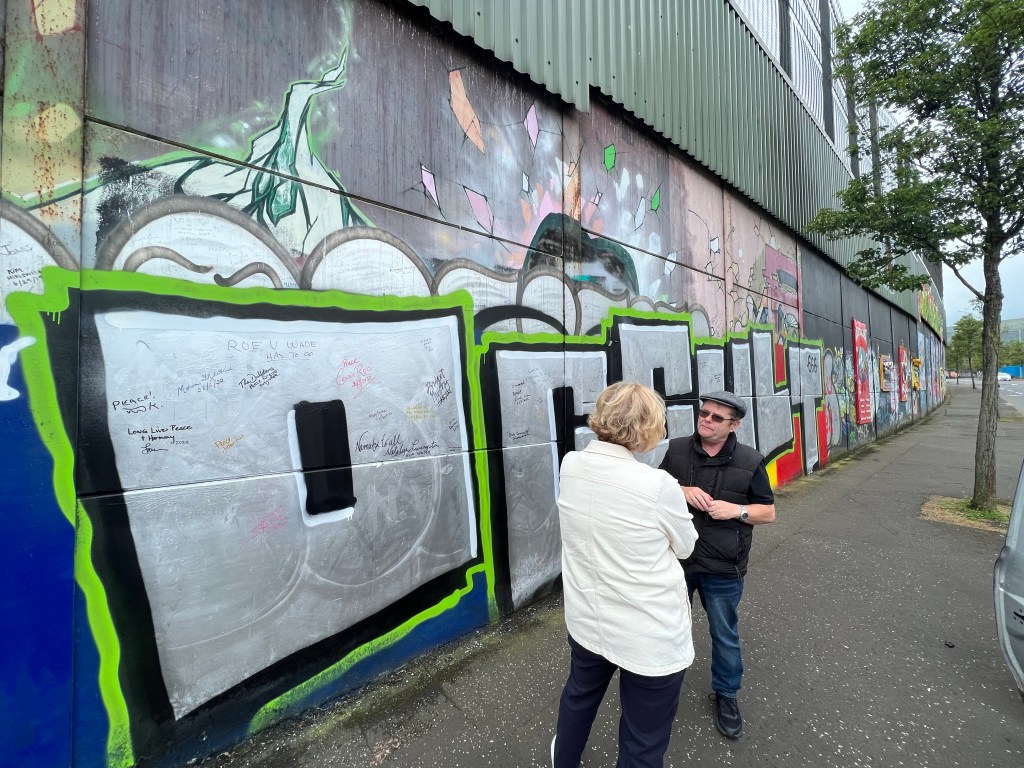
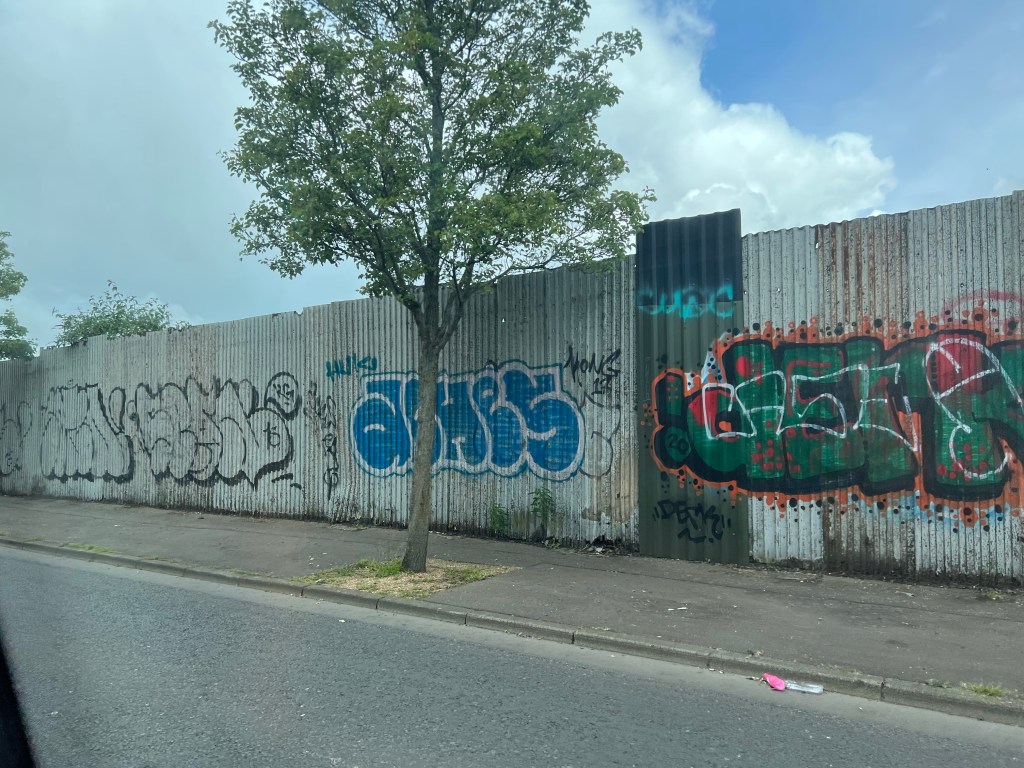
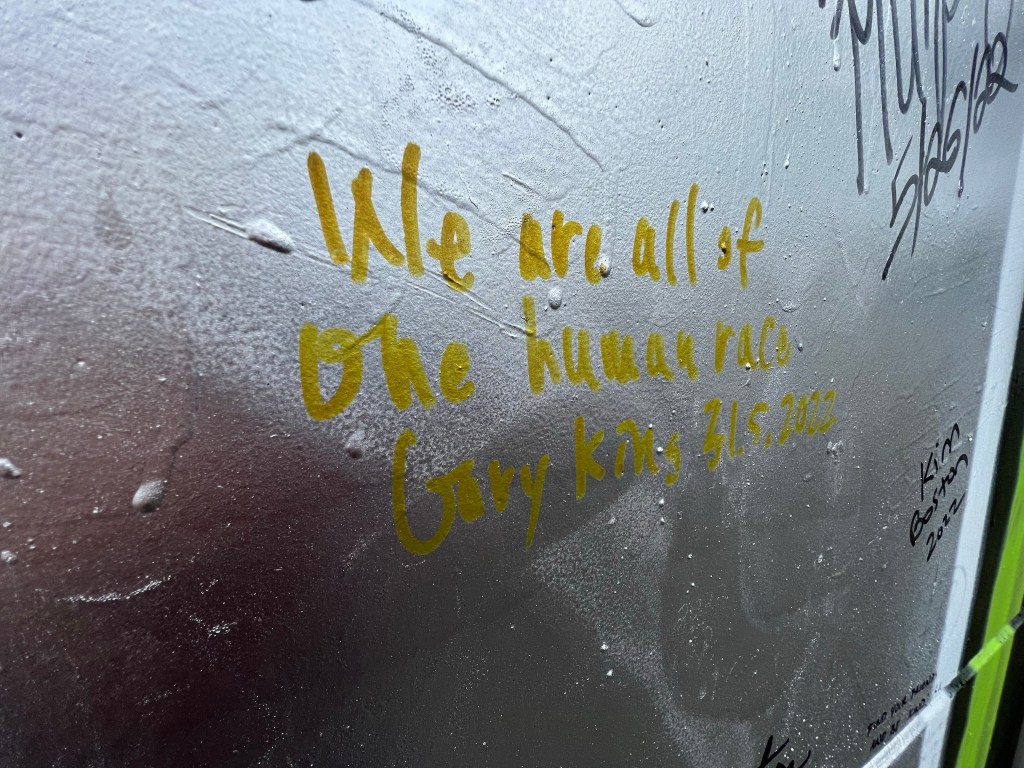
One striking symbol of this time are the remnants of a wall and gates that served as a buffer between the Protestant and Catholic neighborhoods. Although there are portions of the walls and gates that have been dismantled, many sections remain intact, highly peppered with graffiti. We stopped at one point along the wall where Jillian and I added our own messaging to the wall.


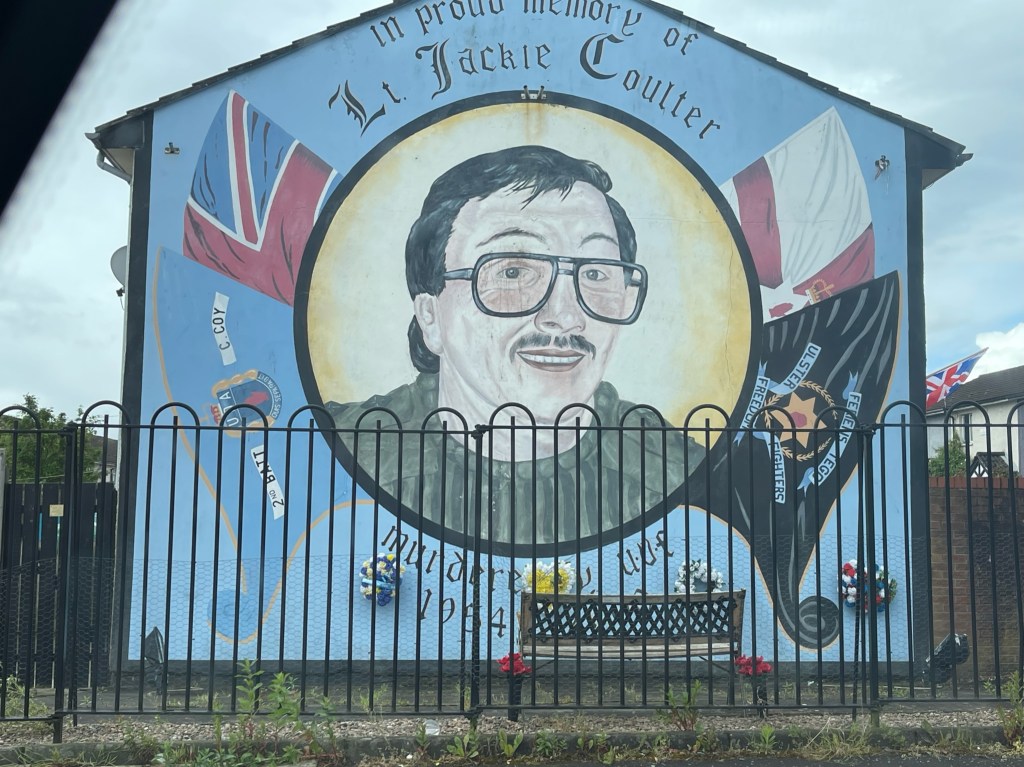
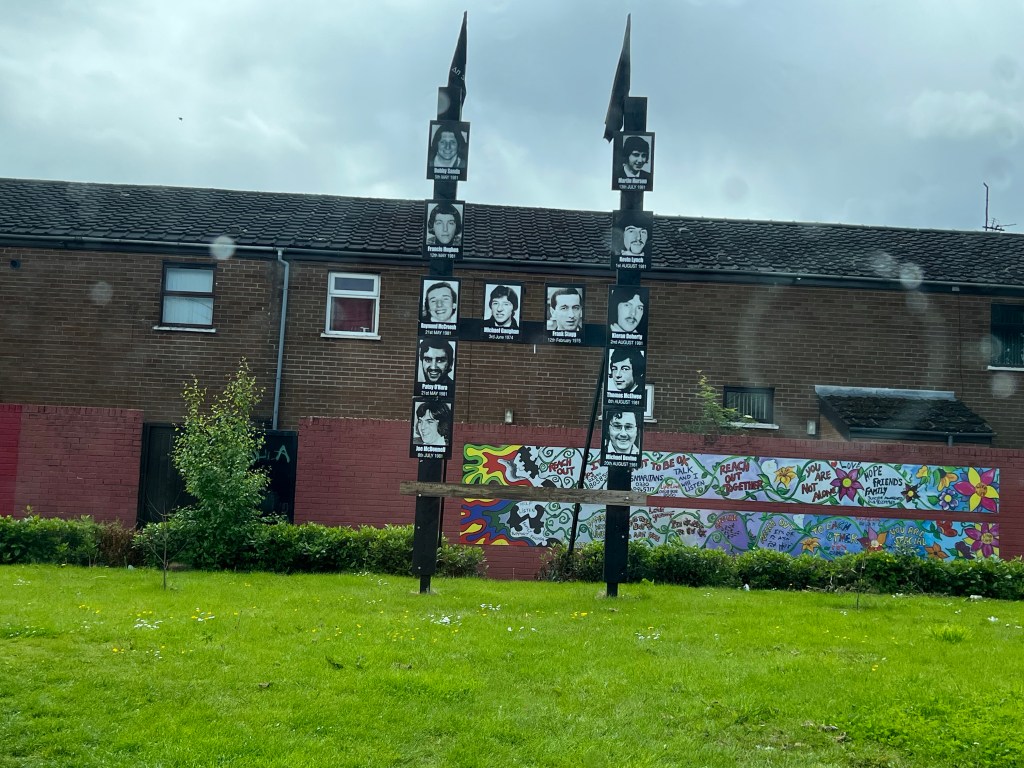
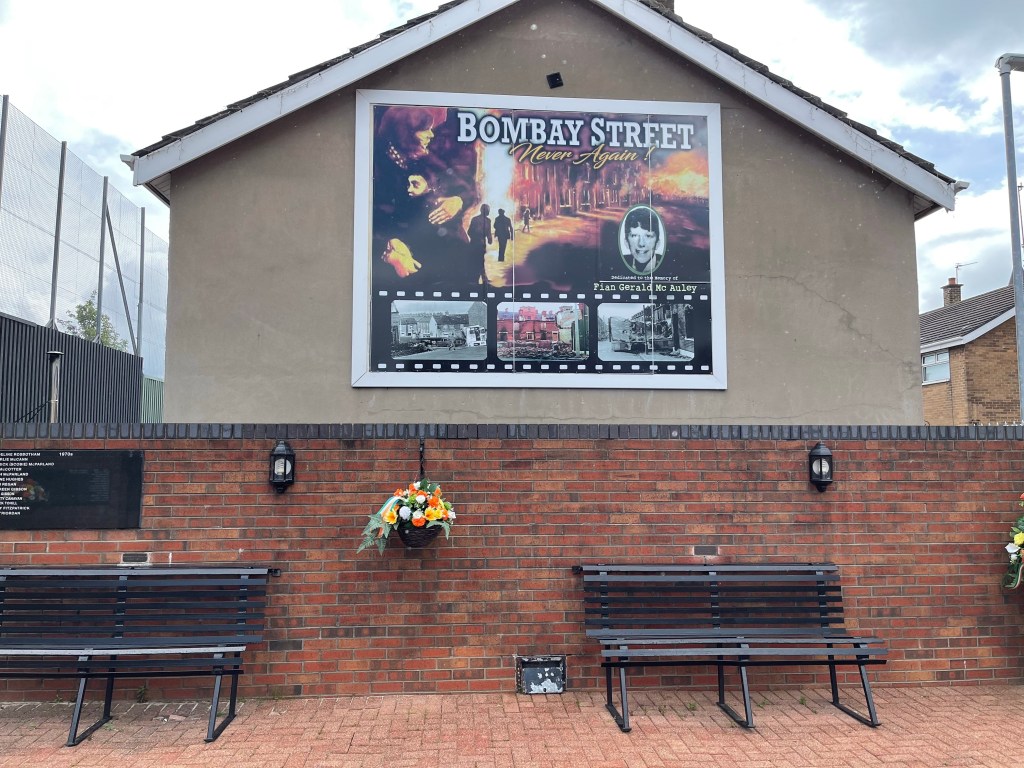
Also sprinkled around the respective neighborhoods are murals and other memorials that highlight martyrs/villains (depending on your perspective) and key incidents. While these items provided documentation of people and events, to us they also keep the foundations of the conflicts like fresh open wounds that don’t support an atmosphere of reconciliation, understanding and forgiveness.



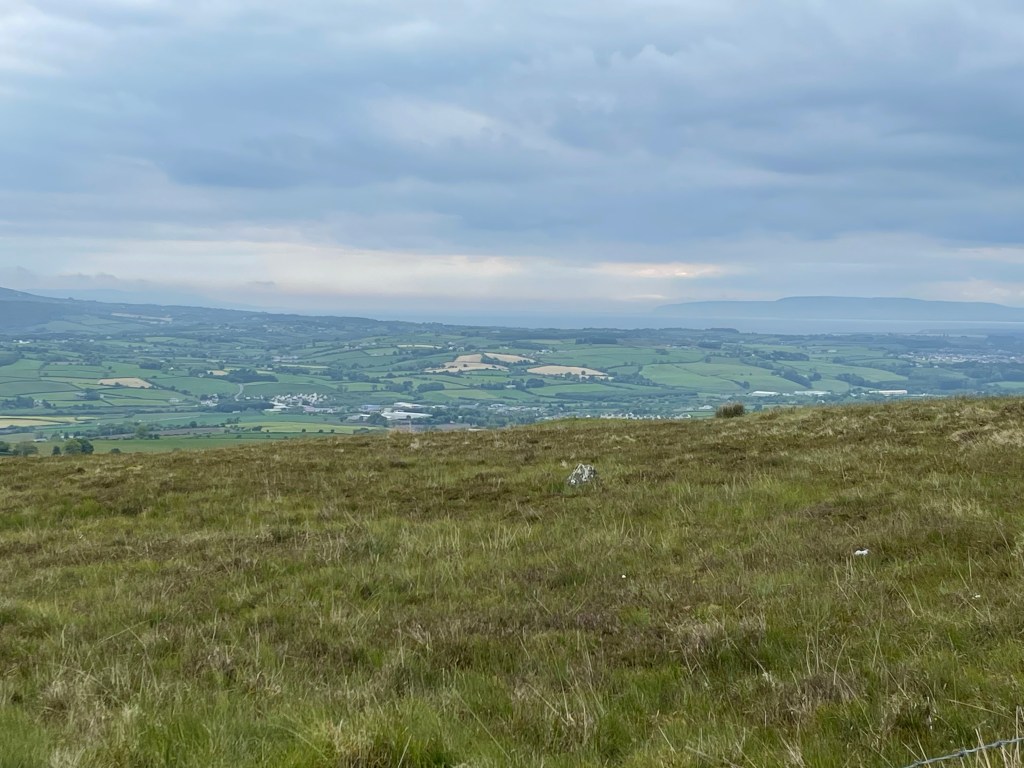
In addition to its sobering history, Northern Ireland boasts some extraordinarily spectacular landscapes – we’ll cover these elements with some degree of focus in a subsequent posts.
 Gary and Jillian's New Adventures
Leave a comment